Chapters19
The episode
In this episode
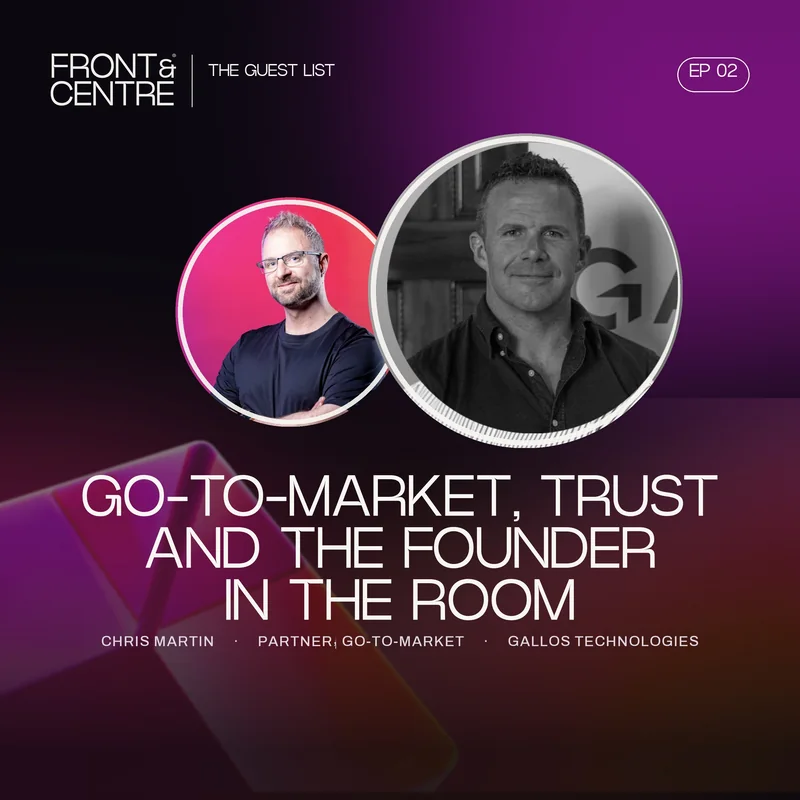
Chris Martin, a Partner for go-to-market at GALLOS Technologies, a specialist investor in defence, security and resilience tech, joins David Ventura for episode two of The Guest List. The opening premise is one most of us feel: nobody trusts salespeople, which is exactly why so many teams rename sales as business development, revenue or customer success. The conversation is about trust in sales, how you win it, keep it and keep earning from it, and why for an early-stage company that trust starts with the founder.
Chris makes go-to-market beautifully simple and then shows how businesses overcomplicate what should be plain. He walks the three-part model, market intelligence, brand and value messaging, then execution across demand generation, sales and customer success, and names the sequencing mistake that quietly burns cash: hiring a heavy-hitting CRO before there is any product-market fit, when the founder still has to be the one in the room.
Along the way: why the best early-stage sales conversations are roughly 50/50, how Chris runs Claude as his chief of staff to turn the conversations he is already having into product-market-fit signal, the leaky-bucket maths of customer success and net revenue retention, why word of mouth is the highest-converting demand of all, and an ugly mirror moment on managing ego.
In their words
Quotable
You can never consider yourself coachable if it's always someone else's fault.
The most underused piece of data in business today is the conversations you're already having.
There's always friction, because the founder has a vision and the salesperson is looking to hit big numbers, not necessarily build a great company.
They have credibility, and that credibility is currency.
It's either the market, your product, or your ability to execute. And that's the bit where it's our fault.
The fastest route to net new is your network.
Answer key
Concepts defined in this episode
Go-to-market
How a company commercialises: David's simple version is the strategy, systems and skills that help you win, keep and grow customers. Chris defines it as the combination of strategy, process and methods that take a technology company to market appropriately.
Founder-led sales
The early-stage motion where the founder, not a hired sales leader, is in the room finding product-market fit. Their market knowledge and credibility cannot yet be outsourced, so they need to read buyer signals first-hand and iterate the product.
Product-market fit
Real evidence that the market wants your product. Until it exists you have a thesis, not a fact, and the founder must stay in the room to test it before scaling a sales team.
The leaky bucket / churn trap
When a company wins new revenue at the front end but loses a similar amount to churn at the back end, so growth is flat despite strong sales. Customer success exists to plug the bucket.
Net revenue retention
Growth from your existing customers (expansion minus churn). Chris argues customer success is a revenue function that drives net revenue retention, not just technical support.
TAM, SAM, SOM
Total, serviceable and serviceable-obtainable market: the numbers that size a market for investors. Chris argues market dynamics matter more than the headline figures, especially in emerging markets.
ICP (ideal customer profile)
The tightly defined customer you focus on, down to the humans inside the account: problem owner, economic buyer, decision-makers and influencers. Focus and discipline beat grand ambition when capital efficiency matters.
Locus of control
Whether you attribute outcomes to yourself or to external forces. An internal locus is what makes someone coachable, because you cannot fix what you refuse to own.
Straight answers
Questions this episode answers
What is go-to-market?
Go-to-market is how a company commercialises and reaches its buyers. David Ventura's simple definition is the strategy, systems and skills that help you win, keep and grow customers. Chris Martin frames it as three parts: market intelligence, then brand and value messaging, then execution across demand generation, sales and customer success. It is far bigger than sales alone, and most businesses overcomplicate it.
What is founder-led sales and why does it matter at early stage?
Founder-led sales is when the founder, not a hired sales leader, runs the early sales conversations. It matters because before product-market fit the founder is the one who can read buyer signals and iterate the product, and their credibility carries more trust than any salesperson can early on. The founder steps back to founder-supported once fit is proven, not founder-disengaged.
When should a startup hire a Chief Revenue Officer?
Not before there are clear signs of product-market fit. Chris Martin argues hiring a heavy-hitting CRO too early burns cash and is operationally unwise, because there are no proven sales cycles for them to run yet. Great sales leaders tend to join post-seed or post-Series A, when the assets and processes exist to execute against, and they iterate rather than build from scratch.
Why is founder credibility important in sales?
Because early buyers are taking a risk on an unproven company, and the founder's credibility is currency. A credible founder doing something genuinely different earns the meeting that a safer, legacy competitor would win by default. The caveat is capacity: lean into it, but do not let the founder become the single bottleneck to growth.
What are the three reasons a go-to-market strategy fails?
Chris Martin narrows it to three: you have misread the market and there is no demand for what you are building; there is a market but you have built the wrong product or are messaging it poorly; or you are simply executing badly, with the wrong team, the wrong targets or weak follow-up. Two of the three are within your control to fix, which is why owning the failure honestly matters.
How can founders use AI in go-to-market?
Chris Martin runs Claude as his chief of staff across the go-to-market motion: automating market research, drafting value messaging, and above all handling revenue operations, transcribing sales conversations, updating the CRM, setting follow-ups, and analysing transcripts for macro product-market-fit signal. He stresses consent and data sovereignty, especially in defence and security, where some cheap transcription tools route data through jurisdictions you would not choose.
What is the leaky bucket in customer success?
The leaky bucket is when a company wins new revenue at the front end but loses a similar amount to churn at the back, so growth stays flat despite a strong sales quarter. It is why customer success should be treated as a revenue function that protects and grows accounts and drives net revenue retention, not as technical support bolted on after the sale.
Who is Chris Martin?
Chris Martin is a Partner at GALLOS Technologies, a specialist investment firm backing early-stage defence, security and resilience technology companies, where he leads go-to-market strategy and execution. He works as an operating partner embedded with founders, and has previously led revenue in early-stage, hypergrowth security technology companies across Europe.
What is The Guest List podcast?
The Guest List is a show on Forefront, the Front&Centre® podcast network, hosted by founder David Ventura. Each episode is an honest conversation with people worth putting front and centre about winning, keeping and growing the customers that matter most, and always ends with an ugly mirror moment.
The guest
About Chris Martin
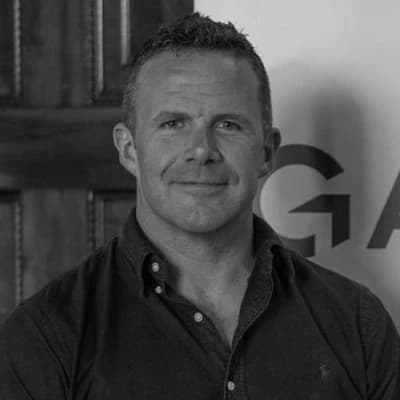
Chris Martin
Partner, Go-to-Market, GALLOS Technologies
Chris Martin is a Partner at GALLOS Technologies, a specialist investment firm backing early-stage defence, security and resilience technology companies, where he leads go-to-market strategy and execution.
He works as an operating partner embedded with founders, the founding salesperson in the room, sizing markets, defining the ideal customer, shaping the value message and standing up demand generation, sales and customer success. He has led revenue in early-stage, hypergrowth security technology companies across Europe, and mentors salespeople across the industry.
Full transcript205 lines
I, I don't trust salespeople. I don't trust salespeople. That's not me saying it, that's sort of history saying it. That's pretty much most people at some point in their life will have experienced a poor salesperson, a dodgy salesperson, an unethical salesperson that leads them to the position of not trusting people who say they are salespeople. And that, of course, is why we have so many sales organisations that don't call themselves sales. If it's business development, you know, revenue generation, customer growth, customer success, which is the after sale, but it's still sales. And, and I think that's what I'd love to explore today, trust in sales. How do we win it, how do we maintain it and how do we keep earning from that trust? Chris Martin, you are the go to market partner specialist in Go to Market at GALLOS Technologies.
I'm not going to do IT service, so I'd love you to explain a bit more about what that means and who GALLOS are and your role there. Welcome to the GUEST LIST.
Well, thank you for having me, David. It's a pleasure to be here. So let me start with what GALLOS is. So GALLOS is a specialist investment firm that focuses on defence, security and resilience technology companies. And my role to play in that firm is a partner specialising, as you mentioned, in go to market strategy and execution. And what that really means is as we're developing new companies in the defence, security and resilience space, it's figuring out how we commercialise those companies, ensuring that we're building appropriate product for market, we're engaging design partnerships in the right way. Essentially my role to play in many cases is an operating partner that knows how to engage with markets, which many founders don't.
So, and it's the engaging with markets that is the go to market thing. Engagement is a proactive activity. It's something that you have to go after. Marketing is great and often drives brand awareness and inbound traffic and go to market is where you intentionally put yourself where you need to be and engage with said market. Everything that you say makes total sense, is incredibly desirable and can often, for a lot of businesses sound really difficult and massively over complicated. I know that's something you and I have spoken about before, where actually in this go to market and sales space we do a great job in business of massively overcomplicating what is beautifully simple. Speak to that. Tell me a bit more about the simplification of a complex thing in building a business and how you go about doing that.
Yeah, so it's the right question. So I think the majority of founders I speak to, which is, you know, quantum of hundreds. Right. What they tend to come from is a strong engineering or technical background. They want to launch a company to, you know, change the world, solve a problem, make a tremendous amount of money for themselves. Whatever their motive might be, the reality is that they know the market dynamics so they understand what that market might need and they have a good sense of how to build a product to service that need. But what they don't understand or quite get their heads around is the importance of being able to commercialise a business and take it to market in an appropriate way. And that's where I come in.
And the reality is for most founders, that they go and seek this advice from, you know, a cohort of people that they might be connected with via their, you know, previous roles as operators or buyers in that market. And they tend to get this deeply confusing varieties of advice which ultimately doesn't form a bigger picture of what they need to accomplish. They can't then coherently build a strategy. If they can't do that, they can't build the necessary programmes to support the strategy and they definitely can't execute against the plan, which means they end up building a product that's not necessarily aligned with market needs. They spin a lot of cycles trying to figure out why it's not selling. They're not capturing the right data to analyse whether they're developing any form of product market fit whatsoever.
And then eventually, worst case scenario, they run out of cash or somehow they manage to hang on. They may be they're raising cash, you know, on negative conditions, which is not ideal for anyone in the founding team. And ultimately they've built a product which is nothing more than an innovation project, which isn't servicing a market need, they're not meeting their revenue objectives, which might be creating friction for them with their investors and their board. Ultimately, they're not on the right path that they need to be on. Yeah, but the reality is, in my view, what I think is quite important here is the majority of people that have come to found companies that have come from market buying perspectives, they tend to underestimate the importance of go to market strategy and execution. And that seems to be with a. Whether the blocker is.
So let me dig on that. Is it that they underestimate the importance of it, or is it that it's either of no interest to them. And I don't mean that they don't care about it. I mean their interest was probably in the innovation and the creation of a technical product that solved a problem that the world had. And like founders, innovators, inventors, that's their passion, that's their purpose. If you then say to them, make this commercial, start talking language that investors need to hear and all of that, do they lose interest? Emotionally, energetically, mentally? Do they just start to lose interest?
Probably is the answer. I can't speak for them, but observationally.
From the outside, and that's no criticism by the way, like it's quite natural, right?
I think so. I mean, and naturally when something becomes uncomfortable, you tend not to lean into that, right? That's the reality of the situation. I think when something is really uncomfortable, you tend to sort of shy away from it or you tend to maybe try and recruit to solve that problem because it's not natural for you. And building product and understanding market is natural for a founder, but taking to market isn't. So then what you often find is people hiring chief revenue officers way ahead of schedule, burning a lot of cash. And in many cases those people, not only are they not, it's not sequenced into the hiring plan appropriately because that's too early for them, but it's also in many cases the wrong type of profile.
Just because somebody's come from a, you know, a huge hitting public company doesn't mean that they want to play or can play in the early stage game, which is still the, you know, the upper leagues. It's just a different sport. Right?
Yeah. Oh, so many more questions. The CRO that you hire early because you think that's the way to do it is likely a heavy hitting CRO from an organisation that was already well founded that, you know, the whole go to market piece was kind of done for them a long while ago and maybe they're at that place where the market knows about them, the product is secure, the brand is, you know, people are aware of it and that makes being. I'm not going to, I don't want to simplify and say that makes being a CRO easy. It does make it easier and that's fair to say. I think no CRO of a well founded business is going to argue with that even though their ego would tell them otherwise. We'll come back to ego in a bit.
I'm really curious though, you know, because a founder that solved the problem, invented a solution, created a service, hires A CRO who is the big dog that's going to come in and save the bacon and make it grow. I can already hear just in saying it like that there's an emotional and a personality clash a lot of the time. Right. Do you, how often do you see that? Like that has to be a real thing, the clash.
It is, no doubt about it absolutely is a clash. But I think if we go back a step here, right. So I think one of the things are important. In fact, let me share an example. So as part of our investment thesis at GALLOS, we look to invest capital into early stage security defence resilience technology companies typically around seed stage, maybe through to B in many sort of a. What we often find as part of our due diligence. And by the way, by the time I'm inserted into this process, it's normally sort of stage three or four.
And our ventures team have done a lot of the profiling around, you know, what this might be to us and sort of comparing it against our thesis and looking at the founding team, the market opportunity and then I get brought in to assess their competency as a founding team to take product or company to market. And I always give the same brief. It's, it's, it's got direction but I leave enough creativity in there just to see how they think about this. And essentially it's product looks amazing, market looks huge. I would love for you to share a few slides and your thinking around how you're taking this company to market.
Yeah.
And then we sit on a session for about 45 minutes and they always do the same two things. The first thing is let me tell you about the market and that can be really detailed and intricate and go to very technical depth is the competitive landscape and why that's fundamentally failing. And then they tell me all about their product, right? How wonderful it is, how innovative it is, where they've borrowed, know some innovation from a different industry that they've had some unique insight on and they're building this thing, you know, comprehensively from the ground up using all the innovative ways of coding that you can possibly imagine. And then it's thank you for your time slide. And I always think to myself, they either didn't understand the brief or I gave an awful brief because they didn't meet it on any level.
Right.
And by that I mean they told me about market, they've told me about product, but they haven't told me anything about how they're Going to market.
No.
And then at which point I will then sort of rebuttal with. Oh, the brief here was to find out how you're taking product or company to market.
Yeah.
And, and I don't think you've really expressed that. And I would love to just maybe have a bit of a discussion about it. And whilst this is a complete paraphrase and I'm talking, you know, hundreds of situations here condensed into one, you know, misquote, which is, oh, we just assumed that if we bought a really great. If we built a really great product in a really big market, it would just sell. And that's never the case.
It's the Field of Dreams moment. Yeah. If you build it, they will come.
Yeah, yeah.
And you know what? I can't, I can't hate people that think that's true because so much passion, so much energy, so much time and so much effort goes into creating solutions to problems. And if it's great, you'd love to think that the magnet will attract. You'd love to think you just stick it out there and people will say, oh, my God, this is the thing we've been waiting for. Yeah. And that's just not the case. And it's especially not the case in a world where if you create something great, there's a good chance, if it's that great, someone else will create a better version tomorrow.
So you asked about friction between founders and, you know, early stage officers, and I want to take that question actually, because I think it's important. And as I mentioned earlier, there's a sequencing issue here, and I think it's a sequencing issue for a couple of things. Like at a particular stage of growth, you need to be operating well, arguably you need to be operating with capital efficiency in mind at all times. Right. And hiring somebody to lead revenue growth and customer success and such precede is really not capitally efficient. Equally, it's not operationally smart because at that stage you really don't have any indication of product market fit.
Yeah.
You have maybe, you know, a thesis, maybe you have confidence. But that needs to be proven. And to prove it, that founder needs to be in the room. The founder that cares wholeheartedly about the product that they're building in the market they've selected to operate in needs to know, at what point is that buyer uncrossing their arms? At what point are they listening very carefully? Are they engaging on a particular statement? Is it the articulation of the problem? Is it articulating the solution? That you're developing or in the process of developing, and they need to have that because if they don't have that, then they're not able to iterate and build product appropriately. Because I can assure you the first iteration of product won't be fit for market. Right.
So if you then outsource sales, execution and strategy to a chief revenue officer, that's not necessarily thinking in the same way that a founder would. You're pushing a product into a market that's not necessarily asking for that product. And what you've got is a revenue officer or head of sales or something that's fundamentally thinking differently about how to win.
Yeah.
Right. And what you often find is really high quality salespeople and sales leaders. They come into a business post seed, post Series A, when product market fit has been established and the assets and the processes required to take product to market are all in place. And all they need to do is execute on the cycles that have already been developed for them. Maybe iterate them slightly, but it's not fundamentally designing it from scratch. There aren't many people out there that one are competent at doing that, but two actually want to do that because it's really bloody difficult.
Yeah. It's the difference between a Formula one racing driver who's had everything built for him and one that actually wants to be in the garage building the kit car first as well.
Yeah.
And knowing that they can go and be a champion on the track as well. That's a strange analogy and metaphor, but I think you know what I mean.
I do know what you mean. And it actually sort of leans into the thinking behind GALLOS. Right. Because as I mentioned earlier, you need somebody on the early stage theme that knows how to engage with market. Yeah, it's really important. But that doesn't need to be a very highly remunerated executive level founding member of the team. It can be an advisor. Right. If you, if you select well, it can bring somebody in that can help you and guide you, can be an operating partner, it can be an employee, but generally speaking, that employee needs to support other things, not fundamentally looking for product market fit. Right. It could be that they're executing some outbound strategy for you. It could be that they're figuring out some inbound stuff with marketing.
It could be that they're doing the heavy lifting on scheduling, coordinating the calendar, but the founder needs to be in those sessions at that stage. Right. And at the point where they think they've got product market fit and they can raise additional capital off that to go to the next stage. That might be the point then, when you want to bring somebody in to own that strategy. But. But it doesn't shift from founder led to founder disengaged. It's just then founder supported, founder takes a step back, maybe only works in on some of the strategic accounts that sit right in the ICP that you've identified.
Yeah.
But my point here is it's really important that the sequencing is right operationally and for capital efficiency purposes. And to answer your original question, there's always friction. There's always friction because the founders have got a vision.
Yeah.
They know market better than most. And the salesperson is looking to hit big numbers, not necessarily build a great company, even though the numbers contribute to that. The reality is there's misalignment. And your original point on you don't trust salespeople for a myriad of reasons that you shared. I get that. Right. And I think it's a misalignment thing because fundamentally you look at it and you go, what is a salesperson trying to do? Meet their quarterly objectives. Right. Revenue growth. It's tough. Been there. Right. There's a lot of pressure, investor pressure coming on the exec team. Exec team are coming on the middle management coming on the sales people. You have to meet those goals, you know, at all costs. Nothing's more important than meeting quarter end. The reality is what's the end user trying to do? Solve a problem using technology.
Those two things are not the same thing. Right. There might be some crossover at times, and it's great when it's there. But if the salesperson is trying to meet a quota, the end user is trying to solve a problem in technology, they're not the same thing. That's where that friction can come in, I think, at times. And there's just a misalignment.
So. Yeah. And that is one of the main reasons you get friction between customer and salesperson. Coming back to the friction, I guess, between CRO and founder, that was a wonderful statement. There's always friction because it's very, I believe, factual. It's very finite and easy to understand. There's always friction. It's like, it's so simple. If we, and you know, you and I have spoken about family life before. I know you've got young kids as well. You, you grow your children up to be able to enjoy the world knowing that there are dangers in the world, there's friction in the world. And if it were, you know, friction, you know, physical, you know, aggression, if you were worried about your kids being able to look after themselves, you'd send them to self defence. Right.
How many founders actually develop their self defence in the business sense of being able to handle friction as their business grows? And I guess some context to that. I work with so many organisations where We've got great CEOs, great leaders who lack the discipline around constructive conflict because it worries them, it scares them, it's uncomfortable for them. And that has to be true of many tech founders, tech leaders, the self defence around friction is missing in their own development. Right, let me come back to the trust piece for a moment because if I was building something where the product itself is security and trust and therefore I need the market to trust it as a product, I need the market to trust the salesperson.
Actually the market is going to trust more so the inventor, the founder, the creator than it is anyone that works for them. So talk to me about the importance of the founder in trust and credibility building when it comes to go to market.
Yeah, and that's a really great question actually, because I think at whichever point you bring in somebody to sort of execute or even build the go to market strategy, the reality is despite what they've done in their careers, they won't be as credible as the founder. Right. Let's assume that this is a typical founder that's come either from industry or from an engineering or even in many cases from academia, but they have credibility and that credibility is currency. Because the reality is when you're early stage, there might be many available solutions on the market which are doing this in a different way, maybe a more traditional legacy approach and they're a safer bet.
So for you to want to take that meeting with a team that are doing things quite differently, the early stage, maybe there's some financial risk in engaging with them, maybe they don't meet some of the regulatory requirements that your procurement people have. And you think this is just maybe in the too hard box. If there's that compelling founder credibility, you think, well, do you know what this person is doing something different and I want to find out what that is. Because if there's an opportunity to engage them and they're actually solving the problem for the bigger market and I can help them with their growth by being an early stage customer, then that would be great for everyone. So that credibility really matters, I think.
And, and do founders lean into that enough?
I, I think I, I think some do. And I think some of it comes down to their comfort levels in the customer Facing environments. Yeah. Now, the best founders are incredibly competent when it comes to building technology. Yeah, we know that. Right. With it, with the backgrounds that they require, they're incredibly competent in raising capital, which also comes with credibility. And they're at least partially competent in the customer facing business winning capacity. Right. And that's where they need a lot of guidance in many cases. Right. Because when you've got all the answers, because you've built the product, you believe passionately in it.
It's really important actually that you can sit in front of that customer and actually sit there with a notion that you don't have the answers and they have the answers and if you can extract them in a meaningful way, you're going to build an even more technically competent product that can change the world for our sake. Right. So I think, to answer the. Answer the question, the founders that I've met, which is an abundance, the ones that seem to do better, and I bet this is manifested in the data, but I haven't looked at it.
The ones that have done brilliantly well and continue to grow companies in line with their trajectories that they set out in the early stages when they were raising capital are probably the ones that have lent in to knowing that they're the face of the credibility face of the organisation. And they've learned, either through necessity or through, you know, self development, that engaging with market is incredibly important.
And as a tightrope, to be walked on there, because yes, lean into it and don't lean too far that you become the blocker to growth.
Yeah.
Because your own capacity and, you know, to become the face of an organisation could for some organisations in the future limit it through their own capacity. And that's something that I think most founders need to be aware of and it is a tightrope to, to walk. Let's come back to the go to market definition for a minute because. So I believe that definition, the only definition that matters is the one that you carry for a word or a phrase.
Okay.
Because that's how you behave like. So your definition of go to market may be the definition of go to market for you and for everyone that subscribes to your definition. And yet for other people they might go, oh, I would also put that in go to market as well. So the definitions are largely irrelevant and yet help us to unpack what does that mean and could that mean for my organisation? So give me your definition. And of course those that subscribe to your definition, give me your definition of go to market like what does it encompass, what does it really mean and what are the areas and you know. Yeah, tell me, unpack that. What are the segments of go to market for you?
Yeah. So I would say, I would define it as the combination of strategy and process and methods that enable a technology company to be commercialised appropriately, I think is probably how I would define it.
Yeah.
And I think to go a layer deeper on that, there are lots of things that need to be sequence configured, planned and executed upon to make that a success. Right. So all strategies start with an objective, right? And that objective needs to be clear. And in many cases when it comes to go to market, it's typically revenue focused. Right. That's a really important metric when growing a company and that breaks down into lots of other things that we could unpack here, but we won't. Right, but let's think of this as a typical technology software subscription business, right? Which is the metric that matters most is sort of annual recurring revenue and how that's growing over time. Right. That's a really important metric. So let's think about that.
So in partnership with the founding team, some advisors and potentially the initial round of external investors, we've developed what we think is a revenue build over time, which informs the cash model or the financial model, which informs our cash Runway, which informs how much money we need to raise and informs, you know, the sequencing of our hiring and all of those things. Right. So you've got an objective and that I hope is. Is ambitious in many ways, but is also realistic as well because it's really pointless developing overly ambitious metrics at this stage just to impress somebody that you're only going to let down later. So then you need to think very carefully, right? So let's understand the first part of the three part process here, right?
When it comes to developing a go to market strategy and executing against that strategy, the first piece is market intelligence right now. So everyone's familiar with total addressable market, total serviceable market and serviceable obtainable market, right? These are really important numbers when it comes to quantifying what your market looks like. And it's also really important when you're raising capital externally because the first thing any, you know, venture firm or investor is going to look at is what is the size of that market. Before they've even profiled you as a founding team or even looked at your product or strategy, they're going to want to know what the size of your market is. Quantifying market is important, but in from my perspective, market Dynamics are far more important than the basic quantifiable piece.
And when you look at market dynamics, you need to look at things like, well, what type of market are we entering here? Is this a huge large market that's been dominated by a small group of public players for many years and none of them are innovating or they're all private equity owned and it's ripe for disruption? Or is it a small emerging market where it's very hard to quantify what the addressable market is? Because actually TAM is essentially the total amount that the end user market is spending on that category today.
Yeah. Not in the future. And could be if they knew more about it.
Exactly. So emerging markets, very hard to quantify that. You come up with these like ambitious. The market is growing in this way.
Yeah.
But understanding that it's an emerging market is important. And then who else is trying to attack this emerging market? Right. If it's, if it's a world changing AI level type of market, then that's going to become competitive really quickly. Right. And do you have the capital strategy to be able to compete in a deeply contested market that might have lots of the larger players that I aforementioned larger players that might be setting up modules to enter that market?
Yeah.
And there are various other markets right there, you know, the quietly underserved markets where the problems in those markets are unsolved and people have decided that they're in the too hard box, in which case there might be an opportunity there if you've got, you know, a drop on the game here and a new innovative way of solving something. Right. So understanding the dynamics are in my view more important than understanding the basic quantifiable metrics of a market. And then it's looking deeply at the competitive landscape like who's performing well, who do we expect to perform well? What are the new, you know, upstarts are going to be attacking this market? Where have we got some unique insights to, you know, to model and profile that then it's understanding based on all of your intelligence. Well, what is our icp?
Because let's assume that it's a growing market or even in a large existing market like focus and discipline will outperform grand your ambition. Right. So when you're operating with capital, efficiency, front of mind, you need to be incredibly disciplined and focused. So figuring out what your ideal customer profile is early enough is really important right now. Let's be really honest here. That iterates frequently because the more you attack that market, the more you learn and it might actually feed into the fact that you're in the wrong place.
It might be wrong.
Yeah, yeah, it's. It's all a projection at this stage. Then not only understanding the ICP that you want to target based on, you know, geography, company size, regulators, industry verticals, it's also understanding the human beings within those organisations that you're going to want to engage with. Right. Who is the owner of the problem? You know, who's the economic buy that sits at potentially the executive layer? Who are the decision makers that sit more at the middle management or technical layer, who the influence of that decision and actually mapping that out and then figuring out, right, we understand market now because we understand the quantifiables, we understand the dynamics and what we expect to happen in the future. We also understand the competitive landscape and some of that might be a bit theory based because you can't fully know that.
We understand what our first initial ICP is going to look like and we understand the humans that we want to interact with. That gives you a pretty good sense of the market opportunity, which then informs what you're going to do next. Right. Which is figuring out first and foremost, what is your brand identity based on everything you've just learned. How do you express your identity based on the founder's vision, based on the competency of the product, the type of technology in use and what the market needs to hear. Right now, this is not my area because, as you know, I'm not creative on any level. So when it.
Don't put yourself down, Chris.
When it comes to colouring and fonts.
And all, every marketing, every CMO right now, listening to this is just hearing you say marketing is colouring and fonts.
No, it's a tiny component of it, but it is a component. So from my perspective, you know, you can use AI in many ways. Right. But I still feel there's a huge place for the creative graphic design folks that can really take the thinking of all the things I just mentioned and express it in a brand identity.
Yeah.
So you've. So you've got market intelligence, you've now got a brand identity. The second part of the second phase then is figuring out your value messaging framework. So you've got a brand identity and that's very pretty, I'm sure. Right. And it's appropriate. But the reality is you need to be able to articulate the problem in which you're solving really coherently.
Yeah.
And then you need to be able to articulate the solution that you're developing and Building and how it's going to serve that. And you not only need to do that in isolation, you also need to express to them at the same time why this approach matters, why using us to do it matters, and why doing it today, over next year matters. Yeah, right. That's all part of the value messaging framework. And then once you've established that, which is a workshop in itself and a equally something that iterates over time, you then need to build your selling assets. What does your website look like, which is a combination of value messaging and brand identity. What does your solution brief look like? Is there any white papers you can develop? What does your first meeting deck look like?
Right, so the sales assets are then an expression of your brand identity and your value messaging framework. So you now know market, you now have a brand identity of value messaging framework and some assets. Now you move to go to market execution. Right, which is demand generation, sales architecture and customer success. And those in themselves need quite a bit of thinking to get right.
So yeah, let's come on to those. Because the question was define go to market and the answer is vast. Because it is vast. It's not just sales. Actually you've included marketing within that explanation, which is in my view, right. Like I, if I was simplifying it and you know me, I'm a simplified soul, right. I like to take the complex and find a little three part model that's probably the same letter, get some alliteration in there. We can up the invoice by 10%. Right. So for me, I think go to market is so beautifully simple. It's the strategy, the systems and the skills that help you win, keep and grow customers. That's it.
I love it. And I'm going to steal that.
You, you're not. That's trademark. But the point is that the go to market piece in strategy, in planning, it's so vast and needs to happen and as we've already discussed, could lose the interest of some founders who have built a great product but don't necessarily have the energy or the capacity or the mindset to want to do that intelligence piece and that planning piece and then we get to execution. Because you can do all of that stuff, you know, really well.
You can find your addressable markets and you can just determine the dynamics and you can figure out who your economic buyer is, your influencers, your decision makers and, and then you've actually got to do something with all that intel and execution is hard and intense and it and there's a lot needed of it in today's world where some of your market might, and especially in the emerging then don't know about you yet. They don't know that they've got this problem that needs solving. So tell me a bit more about that next step then the execution piece and why so many good ideas drop off at that point?
Yeah, that's a good question. So I guess just to refresh, we now understand market and we've built the brand identity, the value messaging and the sales assets and now we're moving to execution. So as I mentioned the moment ago, the first thing we need to do is create a demand gen programme right now founders tend to be quite connected, they have access. Right. And they think, well I know everyone in the industry because I used to operate in that industry as an example. Not everyone did. Yeah. What they often don't realise is two things. One, when you're now on the other side of the fence, people are less inclined to want to speak to you when you know you've got an agenda.
Because you're a salesperson. I don't trust salespeople.
Yeah, you go, yeah. And the second thing is a network is finite.
Right.
So you can't build an enduring demand gen programme off of who you know doesn't work that way. And, and any good demand gen programme as iterates through the phases of growth of a company needs to be multipillared. Right. You can't put all your eggs in one basket. So you need to think carefully about how is marketing going to support demand generation, how sales outreach going to support this. Are there various programmes that you can deploy here? Can you use advisors and investors to help with connectivity? Can you look at outsourcing some of these components? Like there are lots of agencies out there, we haven't even got onto AI, but where can AI optimise and automate a lot of this process? Right now I have some thoughts on that which we can unpack later.
Yeah, yeah.
So you know, a demand gen programme needs to be multi pillared to de risk its execution. Right. But also you need to be experimental. So again, speaking of capital efficiency, a theme I go on about a lot, 80% of your demand gen programme, you need to have really high conviction that it will give you access to the ICP and the Personas that we mentioned earlier. You need to have really high conviction. Okay. So tried and tested methods but there needs to be a little bit of money in the coffers. It put to one side for experimental activities. And for what it's worth, I've been very wrong on demand gen programmes in the past. But it's okay to be wrong if you've got a robust method for figuring out early enough. Like, the real problem here is if you're wrong continuously and you're too ignorant.
To accept it so well. So is the. You said the robust method of figuring out that you're wrong. Is that just as simple as being honest about what's happening and not trying to dress it up as something it isn't like? I think we're really good at human beings at putting all the blame and excuses and reasoning for why things go wrong elsewhere rather than just saying, you know what, Yeah, I screwed up. It was the wrong choice. Because it's okay to make mistakes. We tell our kids this. It's okay to make mistakes once or twice. If you learn from them, it's when you do them repeatedly, it becomes a competency issue. Is it that the biggest single thing that's missing from failure is the acknowledgment of it?
Well, I love that you and I have spoken for years about locus of control and. Right. And how that feeds self development. And you can never consider yourself coachable if it's always someone else's fault.
Right.
And you know that's something that manifests in my recruitment activities deeply. Actually. I think demand gen, when you're trying to figure out if it's working or not. Right. It's really important. And this is kind of the final bit of execution, which is data intelligence and rev ops. I love capturing as much data as possible to see if there's any, you know, signals here suggesting that I've got this wrong or I'm getting it. Right. But I think. And there's a qualitative assessment here. Right. And this is why you need smart founders, people on the founding team that are smart because they will think qualitatively and they will, they will express that qualitative intelligence as something that might be a little bit more grabbable.
Yeah.
And there's one of three reasons why it's going wrong. Right. One, you've grossly misinterpreted the market and it doesn't want this. This whatever it is you think you're building, it doesn't.
Yeah. Just because there's a gap in the market doesn't mean there's a market in.
The gap to think about that.
Yeah.
You know, essentially you're a think tank and there's no market attached to what you're doing.
Yeah.
So that's one. And that does happen.
Right.
Or there is a market. You've just built the wrong product and. Or you're messaging it incorrectly. So everybody wants the solution that the market needs, but they just don't want yours because you haven't built it appropriately or not messaging it appropriately. Or the third reason is you're just cocking it up. You've got the wrong team, you're not executing the demand strategy, you're talking to the wrong people, you're. You're communicating incoherently, you're not following up appropriately, whatever it is. Right. So it's either market, it's either your product or it's your ability to execute. And that's the bit where it's like, this is our fault.
Yeah. And we've got to be okay to say that because we can't change something we can't acknowledge or refusing to acknowledge. Going back to the founder being the salesperson that now the market that trusted them so much before they had a product is starting to distrust. It's like that is a thing. They're in this world now where they are selling whether they like it or not. As a seasoned sales pro. Right.
Very kind.
What advice would you give them about how to lean into becoming more of or a better salesperson? Like, what are the. Like. If I was a founder and said I'm new to sales, Chris, educate me and educate me quickly on the world of sales, what would your advice be?
Right. I mean, that's a big question, but I'll try my best to simplify it. So I think it starts with the type of founder that they are.
Yeah.
So you get sort of CTO style founders that are brilliantly technical.
Right.
Have all the answers and have developed something incredibly innovative. My advice to them, in most cases, I'm not trying to make a huge generalisation here, but in most cases is you don't have all the answers. You have some of them and it's a starting thread to pull on for this conversation. And if we've got most of what you think right, this is going to be a brilliant conversation. But you cannot sit here like a professor and tell everyone that they've got it wrong and we're the gold, the silver bullet that's going to solve the day.
Right, Right.
That, that is something that I've seen a lot with incredibly impressive, technically visionary CTO type founders. Right. They need.
Because it's, it comes across as patronising and know it all, doesn't it? Even if you do know it all and you are better than me at said thing, the rebellious teenager inside my brain does not want to hear that.
I worked with a CTO once that was well and is incredible, right? A real visionary. And the presentation style, whenever they're talking about their solution was after every couple of paragraphs they would stop and say, makes sense, right? And that's such an awful question because what they're really saying is, am I too smart for you? Is this making sense? Are you keeping up with me? Or they're trying to ensure that they're tracking along and they pseudo agree with what's being presented, but in actual fact it's a closed question which doesn't give that particular person any intelligence on how to iterate the rest of the session.
Whereas they could say, I've just spoke at you for a few moments on something that I believe really passionately about, but I'd love to hear your thoughts on whether I'm on the right tracks or whether you think differently about this. And they might go, we are completely on opposite sides of the spectrum. I don't think you're anywhere near the problem set that we're dealing with today. Now, in isolation, that might feel like the beginning of an awful meeting, but the reality is now that we've got something we can learn and if we can learn, we can solve a problem, we can iterate. And before you know it, you're in a better position.
Becomes a two way conversation. It's so interesting that you talk about the make sense question because the way that you've said it, the way that you, even the tone and how you said makes sense, that did sound quite patronising. If I was on the receiving end of that, it would be, are you as intelligent as me? Are you following? Sometimes, and I know I'm guilty of this sometimes because I think out loud, right? So I will say, does that make sense? Because I'm actually asking, have I ever complicated that? Have I explained that well enough? Like, am I speaking English? So I think what we're actually leaning into isn't just a don't patronise, you know, don't ask questions that are closed. It's ask and say things that are assertively in the direction of what you need. And that is a skill as a salesperson.
It is a skill to be assertive, not aggressive. And assertive could be, I'm not going to stand here and imagine for one minute that I know everything about your world that's your Job, not mine. I'm very passionate about what we do and that's why I've just said all the things I've said. What I don't know is whether that's on the page you're on. And I don't know whether any of that in reality aligns with your thinking. So before I go on and waste your time, what are your thoughts?
I personally would love that approach.
Right. And not everyone would.
Somebody read it as incompetent, but I love it.
Yeah. And you know what? And. And I am. People say this to me all the time. The way that I articulate is my style, the way I do it. And I'm okay with coming across, you know, vulnerable or self deprecating at times because it works for me and that's my style. And not everyone would be. Some people would hear that as incompetence, others would hear it as really human and therefore really lean into it. Like I always say it, go for the notion, not the words. The execution will be yours. And how you say things like that. But the point is the assertion of it would be wrong of me to assume your world. So help me understand it.
Yeah. You know, I think coming back to your question, because I went down a rabbit hole on that one particular thing which actually used to really grind me and it was very hard to shift that, I might add. I actually don't think success sounds like.
It sounds like you're still working through that pain.
No, no, I'm not. I'm not. But I think your original question was what advice would you give them to transition to a more competent salesperson as a founder? I think the macro advice is this. The best conversations in a sales setting certainly at early stage are bidirectional. And I think if you were to record that call and ask an AI agent to say who spoke here, if it was 50% founder, 50% buyer, I think that would manifest as a much higher likelihood to convert through the process. Yeah, I think because it's a combination of presenting ideas, listening, iterating, debating, discussing, and maybe getting to some form of consensus at the end which allows you to move this forward.
So simplifying those instructions though, to even simpler than that. It's a conversation full stop. Yeah, just full stop. Because actually if we start then putting agenda into it to understand needs to be able to say a little bit about more about what we do to ask these questions, to assert, you know, ourselves, to make sure that we know who the economic. Too much. Too much founder. Have a conversation. Have a conversation. With someone that may or may not have a need that you can solve, that someone who may or may not might be able, they might be able to educate you on something. You might learn something from them, they might learn something from you and, and, and have a conversation. Maybe that's the simplest thing to say to a founder. Sales is about starting with a conversation.
Yeah, I'd agree.
And in that conversation, I think the other thing that's come up a lot with your explanation there and something that I don't think new sales people appreciate enough. And I'll tell you how someone said this to me when I first started out in sales. It was a sales director that said to me, David, sales is a game of failure. And I was like, it's a bit harsh. I'll look forward to my day at work then. Now what they meant was actually it's not just failure in a sense of, you know, you're always going to get it wrong. It's like you will get it wrong and that's okay because you'll learn from it. More importantly though, it could be a game of rejection in the early days. And most human beings have an epic fear of rejection.
And most founders certainly won't like being rejected on something they put their blood, sweat and tears into. Like they know their products good, they know their service feeds a problem that exists in a market. And it is a massive solution to be told, I don't get it, don't want it. That's gonna hurt, isn't it?
I mean, yeah. I mean, one hand, yes, it's going to hurt because it's, well, it's confrontational in one way, but equally on the other, it's sort of saying that something that you've decided to pour this stage of your career and life into might actually be inaccurate. And nobody wants to hear that. But I think on the second hand, it's just because one person tells you that doesn't mean that the whole market thinks it.
No.
And the reality is there are so many ways to solve so many of these problems that, you know, technology companies and founders are trying to get out there and do. Yeah, you're not going to have 10 out of 10 success rate. Right. Whether you're the most credible founder in the world with the coolest product. And there are some companies that have incredibly high product market fit at a very early stage because they have, they raised the right capital with the right team and build the right product in the right market and life is easy. And I've been a part of one of those companies and I always get a pat on the back for the growth we experience. But deep down I go, anyone could have done that because we had such great product market fit. But that's not the reality of most companies.
Right, well, so I'm going to stop you there because that's very, I suppose that's a, it's not, I don't want to say, it's an honest reflection. I'm trying to find the word for it. It's a, that's an inward reflection that I don't think is accurate.
Okay.
Like the, anyone could do it. You know, full disclosure, I've known you for quite some years and I've seen your success through the different tech companies that you've worked with, all of which are incredibly successful. And a lot of that success comes down to the people that are in that team of which you are and were also one of the people in that team who led people in that team as well. So I would not say anyone could do it. I would say that something I've observed in you is an absolute almost obsession with the systems that surround the success. And I don't necessarily just mean, you know, are you using the best CRM, are you using the best you know, and I mean the process. You talk about methodology, you talk about structure.
You know, that's what I mean when I say system, I mean structure and method. And in today's world, of course, much of that structure and method can be systemized without the need to buy a massive tool like we all, everyone has access to whether they know how to or not, whether they use it or not, whether they pay for the subscription or not. They have access tools that can help them automate much of their method. So I know you said let's unpack that and I don't want to unpack it for long because it could be a whole conversation on another day. Tell me about the role that AI can play for early stage organisations founders that are growing their method from scratch.
Yeah, we could spend a lot of time on this and I'm actually in quite a fortunate position because through my work at GALLOS and my connectivity I'm exposed forward leaners in AI productivity. So I get exposed to some pretty interesting new methods, should we say. So I like to think of myself as quite far up the adoption spectrum of how to optimise and enhance go to market activities, strategy building and execution using AI. Now I do have some fundamental beliefs though. So first of all, I think research is hugely automatable using appropriate LLMs. Right. And we talked earlier about market intelligence. That type of work would be, you know, a team of specialist people trawling all sorts of open source materials and you know, privileged materials to try and determine what that market intelligence needs to look like or does look like.
The reality is now that you can automate a huge amount of that. Now it does need correct prompting, it does need human oversight, it does need to pressure test some of this, but there's a huge amount of automation that can happen there. Right. Now we mentioned earlier about some of the brand creation stuff. Yes, of course. Right. So developing collateral, developing your value messaging framework, you can use LLMs, very rudimentary fashion to articulate things. Okay, pretty basic, right? But then when you start moving towards execution, this is where I think for founders specifically, this is where it really comes into itself. Because one of the biggest challenges any founder has, certainly if they're in a founder led sales motion, which most or all should be in, is time. It's a physics problem.
There's not enough hours in the day for them to continue their investor relations and capital raising to run the company and all the operations associated with that to run, go to market and of course to be responsible for product build. There simply isn't enough time in the day. So I'm, it's not clear to me where you can operate, where you can automate and enhance AI across the various other pillars. But if I focus on go to market, one of the huge ones for me is around data intelligence, revenue operations and automations of really manual processes right now. And I'll give you an example. So I'm using Claude currently as my central brain, that is Essen, essentially my chief of staff. And as I mentioned earlier, I'm a partner at GALLOS Technologies.
But I get deployed into these early stage companies as the person responsible for go to market. So it's an operating partner model. Think of me as the founding salesperson, sales leader in those companies. Right. But it's fractional, it's not full time. And because of that I need to be incredibly efficient with my time. So CLAUDE is my brain and I'll set up an agent so that it'll work specifically one company. Now there'll be various tools that CLAUDE will manage on my behalf. Now one example would be we're doing let's say 20 meetings over the next 10 working days and they're more design partnership led, trying to look for product market fit signals, more so than just selling. Right. We're looking to win design partners to help us build product and hopefully we can commercialise that relationship later.
Now, what's really important during a 60 or a 90 minute session is that we're executing, as we mentioned earlier, delivering on the expectations of the meeting, communicating, articulating the problem set as we see it, what our solution is to deal with that. Why now? Why us? All of the things that we mentioned. But at the same time we're having to listen really attentively for signals that there might be something here and we're building the right product. And those signals are important in isolation for a customer or a potential design partner, but they're even more important on the macro level. So if you can transcribe all of your sessions, you know, in a secure and sensible fashion. Right. With full authority of the end user that you're speaking to.
And, and then you take those transcriptions and you ask your LLM to analyse them deeply for macro observations of product market fit. It's amazing what gets surfaced over a significant enough data set. Yeah, really important. And then that feeds into sort of product direction, also then feeds into messaging and how we're communicating this. And the LLMs can also offer you some guidance. Right. Because you're so in the weeds with every session that it can say, you know, you misexecuted on that. You, you sort of spoke 75% of the time. You weren't really extracting this. It wasn't really qualifying whether they're a good fit for you, a bit forceful, whatever it might be. So you can get that coaching, but most importantly, you get those macro signals.
Right? Yeah.
And then you can automate the process of extracting the macro signals, ensuring they reach the right place so they're being analysed by humans in a workshop setting, which then goes to feed into product development and technology, but then also how we're messaging and communicating, as I mentioned. Yeah, that's just one example. But equally, and you know, this is. I'm showing my age here. Back in my day, I would have to schedule half a day a week to do my CRM updates.
Yeah.
And I often.
The kryptonite of a salesperson.
Exactly. But I often wouldn't do it for the right reasons. I was too busy in customer interactions or managing projects and deals and trying to, you know, meet quarterly objectives and all of the other things that go with trying to be a high performance sales manager. So what that would happen then is that problem would compound weeks over weeks until Somebody would say, Chris, your CRM instance is a complete mess. And then I would need to schedule three days. That's three days out of the office.
Yeah.
Now all of this is happening with Claude and a variety of other tools that I'm using currently to not only look at the transcriptions for product LED macro observations, but also looking at things like, okay, that was a really great meeting and this is what you agreed as next step. So make sure you include that in your follow up communications. I'm also going to populate the CRM with all of the notes that were, you know, captured via the transcription. I'm also then going to set all the reminders in your calendar based on the next cadence of activity.
So I'm going to take control of your M365 and I'm going to put in a follow up session with the customer at this date as agreed, or if there isn't a date agreed, perhaps we put a follow up reminder in your calendar to reach out to them. And I'll also give you the notes when I do that reminder for you so that you know what you're dealing with. And this isn't trying to in any way take away the personal connection to somebody, but what it does is it frees up the brain power like that sort of cognitive load to focus on the things that really matter. And you've got this safety net in my case, which is Claude, that's just covering me on all things, ensuring that no balls are dropped at any point you talk about.
So, you know, you just said I'm showing my age. Actually people who are even older will remember a time where most executives would have had PAs or EAs that would have done that briefing for them. They would have spent a day in the office analysing what that person needs to have told to them before they go into the next meeting. We're just saying, actually, these days AI can do it. And I want to link two things together here that we've spoken about because we've just said one of the single biggest mandates or piece of advice to a founder who needs to do sales is to have conversations, right? And record every conversation and give that transcript to your tools, whatever tool you choose, and analyse the sentiment in those conversations.
So I genuinely believe the most underused piece of data in business today is the conversations you're already having.
I, you know, I completely agree with you because I think that is one of the most interesting data sets you could possibly have as you're trying to build product, establish icp, iterate the company and win. Right? And also having it like retrospective. Look, we're having these conversations, I wonder what they were like LIST last year and then asking it to analyse 500 transcriptions of your meetings last year to see if something has changed. Is there a macro market movement here that we haven't been able to detect in isolation, but we're seeing it over the huge data set.
But I do work in security, defence and resilience technology, so it's important that I say, because I'm sure many of my colleagues will hear this, that I don't think it's cool to be transcribing everything without the knowledge of the end user now and having that data stored somewhere that perhaps you're not in control of it. And there are lots of tools out there that are giving you know, licences very cheaply. We don't know where this data is going. We have done some experiments in GALLOS where we've looked at certain things and there are some publicly available tools that transition lots of the data via services in China. Right. And you know, there are certain legalities, shall we say, in China that encourage you to join, to cooperate with the intelligence services if they see f. Yeah, I say encourage.
My point here is you might be transcribing lots of your internal meetings, you might be discussing things of, you know, secrecy or importance or with customer data or intellectual property or your strategy and thinking for the future. And this is all being analysed by something that you're, you know, that may be more nefarious that you give it credit for.
A final thing that I want to just ask you about because again, all of these things we could talk for a long time about, but I know there's a piece in your model and your framework about customer success and I believe that customer success isn't just an after sale thing. Actually we set the customer up for success long before we actually even engage with them. That's part of the product and the solution itself. Customer experience matters. And creating a customer experience that's packed with moments that matter is what builds trust. So just again, very briefly, give me your take on the importance of customer success and I guess why it's underlooked, overlooked or not, or they're not being paid enough attention in many organisations that are in that fast, grow, grow, scale, scale, win, win.
Like it's not just winning go to market, it's winning, keeping and growing. So the keep and grow requires customer success, customer experience. Tell me a bit about that.
So let's look at this rather crassly through the lens of investors. So they've committed some revenue, some capital to the organisation, they want to see you winning at the front end, I. E. Your, you're winning net new annual recurring revenue on annual or quarterly basis. But then there's the leaky bucket analogy, right? So you can, you have an amazing demand gen programme, you have an amazing sales architecture of credible people and you can win business with, you know, high conviction, high conversion speed through the funnel and a decent ASP average sales price, right? But your customer success programme is sorely lacking, which means for all of the revenue that you're generating, you're losing a significant proportion of the amount of that at the back end.
And in many cases, and I've seen this certainly with companies that focus on the mid market and they have high volume of sales is they end up in something called a churn trap, where they're losing just as much customer revenue as they're gaining on a, you know, quarterly annual basis. So their growth is flat, despite looking like they're winning on the sales front of the business.
So I think if you look at it through the crassness of that, right, and I'm not saying that's the only lens to look at it through, it is really important that you've configured your customer success operation in a way that protects your revenue, grows your revenue, keeps your competitors away from your customers, ensures that their experience is superior, that the product is working within their environment, that you're gleaning signals from the customer on how to iterate the product so that you're enhancing it further. And of course you're contributing to your net revenue retention, right? So you're growing your customers over time. The subscriptions are increasing, so you're not just winning net new business, you're also growing your existing customers. That's really important and that is part of the revenue function, not the technical support.
However, there's a couple of things here that are really important and I think customer success, whilst there are lots of things you could do to automate and enhance that using, you know, various techniques like AI these days, the reality is it is still in the power of the relationship. And I genuinely believe that if you're winning customers at the front end, their experience has been superior, they're backing you at an early stage where potentially that's a risky move for them to ensure that the transition into the customer success programme and that they're listened to and that their experience is superior and that they continue to use the product, they continue to enjoy the product and they continue to grow their revenue with you because the product is enhancing is incredibly important.
And what a lot of people don't realise is it's not just about the brilliance of the programme contributing to keeping that revenue. There's a demand gen component here as well. Really happy customers that have got all of the things that I just mentioned are really eager to introduce their friends to you.
Social proof is the number one part of any go market strategy that is massively so. There's the talk triggers statistic that says that 91% of business to business decisions are influenced by word of mouth and yet only 1% of organisations are intentional about their word of mouth strategy.
Right.
That's terrifying worrying because we leave it to chance.
Yeah. And do you know what to add to that? The role that I held prior to GALLOS, which was in an early stage hypergrowth security technology company and I ran the European team for them. We did some analysis on lead gen and were looking at lead gen as a macro. At first it was like what it, what, how are things working? It's sales architecture and lead gen, but it's how many leads are we generating, how many of them are moving to pov, how many of them are moving to X procurement and so on. Right. So you could see the conversions through the funnel. That's pretty, you know, rudimentary sales metrics. And then it's a case of what was the ASP at the end of that? And then we started looking at it under a bit more detail.
So, okay, what was the deal source of each of these things?
Right.
And there was various things. The channel was very good because in theory you're coming in via a trusted partner that already have a great relationship with the end user. Then there was the call to things like sales outreach and marketing and digital and other things. They had much lower conversion rates. And then this one shining light. Now it wasn't a huge number. The data set was small, it was maybe 12 deals, but it was 100% conversion. 12 Leads, 12 deals, all at a very strong ASP, I might add. So the immediate answer then is, well, how do we just get all of our demand generation happening through word of mouth and customer success? The reality is it becomes kind of finite and there's only so much you can ask of them. But as I mentioned earlier, demand gen needs to be multipillared.
If You've got a near, or in our case, 100% conversion rate. You need to invest in that. Right? There needs to be, there needs to be serious thought, resource and allocation of capital into that programme. Because if you've got really happy customers, they're giving you the highest possible conversion leads. Yeah, and it's incredible.
And, and it isn't just, as you know, customer success isn't just about the nps. It's not just about asking them a question every now and again about would they recommend yes or no and going, look at us, we've got a 99 NPS score or whatever. No, it's about having an intentional execution and activity around driving the success of those customers so that they want to talk about you and so that you're asking them to talk about you when that's appropriate. And you are amplifying what they say in your marketing and your messaging for other people to hear as well. It comes back to that conversation piece, you know, if you are having with permission, conversations where good stuff is being said about you by your customers, are you capturing that and using that in a way that can help?
There's one other component to this as well, and I mentor a handful of younger than me, at least, salespeople within the industry. And one of the bits of advice I always give them is most organisations, most, you know, early stage tech companies certainly post Series A when there's a formal customer success programme in place. They've articulated their sales architecture and their customer success programming as a handover. So the sales people go out and win the deals. And then once that's done and the purchase order has landed, the customer success people come in and they handle, you know, deployment and configuration and any service overlay and the relationship going forward and quarterly business reviews and all of those things, and the salespeople move on to the next stuff.
And I understand that, right, because in most cases they're incentivized and targeted aggressively on net new annual recurring revenue, not retaining that stuff. In many cases, they don't have any part to play in that from an incentivization point of view. But the bit of advice I always give is if any of the customers you've won are having a quarterly business review, you need to be on there, right? If there's any opportunity to have a cold beer or a coffee or a bit of lunch with a customer that you've won historically, you need to be on there, even if there's nothing in it for you in your current role. I Assure you, in high consequence markets where some of the buying community have quite transient positions, these people will be moving to various other organisations.
And it is in your interest to build as good a relationship with these people as possible for all the right reasons to ensure they're looked after and to ensure you're having a, you know, genuine good dialogue with them. But they will move around and they will soon forget the people that did the deal and moved on.
Yeah.
And then we just handed over to some customer success person. If you're a young salesperson, you're having the opportunity to win net new business, you need to stay sticky with these people for all the right reasons around integrity. But it does pay off in the long term.
Yeah.
Not to mention they move on. You also move on. And yeah, the network is a hell of a thing. It's organic, it's growing, it needs to be kept alive.
The fastest route to net new is your network.
Yeah, yeah, I like that.
If I can ask you one sharp and quick question at the end and that's the ugly mirror question. Like I always ask guests on the show to talk about something that could be uncomfortable but it's really a point of learning that you've had in your career and therefore could be useful to others. And I want to ask you about ego. You know, high performing sales and go to market individuals will come with an ego that can be really powerful. You know, the, that amplifies their confidence into success and does all the great things that an ego should and equally can be really difficult to tame and manage. How have you managed your ego through your sales career in a way that perhaps leaders and founders could learn from.
Feels like a loaded question because you've known me a long time. How have I managed ego? It has. So I. First of all I'd like a, a reframing of the term ego.
Of course that's the ego kicking in.
Of course it is.
Carry on.
So I've operated with very high levels of self confidence in the past and a lot of that has been a facade in my earlier days because the best way to build self confidence is to have a stack of evidence that you know of things that you've accomplished in the past. And if you don't have that then you need to operate, I guess with false self confidence which is maybe, you know, a component of ego. I don't know. But to answer your question, I think it can be a really positive thing in many ways.
Right.
If checked.
Right.
If you, if you've got your together and you appreciate that the competitive nature within you can often express itself as egotistical or arrogant.
Yeah.
You need to get control of that.
Right.
Because inwardly, if you have a chip on your shoulder where winning is incredibly important, you have a very strong competitive nature, a stress tolerant character, all of these things, then it can be really powerful, really powerful. But if left unchecked and that becomes this untamed ego which expresses itself as arrogance, self importance, that doesn't go very far. So I think to be able to look in the ugly mirror and realise if something is going not very well, to be able to be introspective. Introspective and think with the locus of control being, you know, centred to you and not external to you, I think many people should come to the conclusion that perhaps they're not conducting themselves in the best possible way.
Yeah.
And the spectrum of self confidence and ego is maybe, is the slide is in the wrong spot.
Thank you. And it's interesting. Yes. I have known you a long time and that introspective quality is something that I've always known you to have, if you don't mind me saying. And I think just the ability to be able. And it isn't about taming or harnessing sometimes, it's just about knowing that it's there and that you're using it for good purpose. I think, you know, ego sits in the belief mechanism of a human's brain and a human being will only behave in a matter that's consistent with their beliefs and beliefs don't have to be true or false. In an ideal world, they serve you well. So if a salesperson wants to believe that they are the best in the room that they can, then let them believe that if it serves you and them well and equally demand introspection.
That if, and I always say demand introspection and give full permission to the people around you to challenge you if you've stepped over a line and be okay to hear that and just know, I'm sorry I stepped over the line. I'm doing it because I'm passionate and I want to win for us. Let me know if I've overstepped and that's okay. Chris, so many areas that we could go through, go to market is beautifully simple. We've said it. So being a salesperson, beautifully simple, said it in a not so simple way. Have conversations, start with conversations. And have all the qualities that good sales need to have. Know that there are many components to go to market that you need to be focused on at all times.
Lean into the systems, the AI, the technology that can help you do that more systematically in an automated way where possible, but never lose the human touch. And first and foremost, if you are selling any service, any solution that requires that your customers trust you, then present yourself in a trustworthy manner. And if you, the founder, have the biggest sense of credibility, then we've got to amplify that founder in a trust building way for the market that you are going to. Chris Martin, thank you so much for joining me today on the GUEST LIST.
Beautifully summarised and it was great to be here.