Chapters18
The episode
In this episode
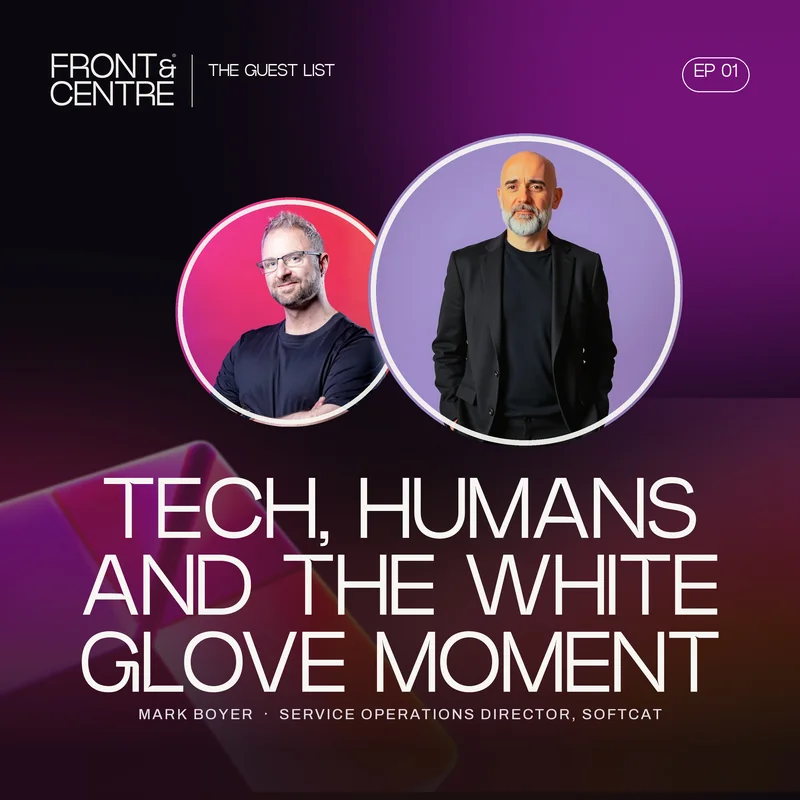
Softcat's Service Operations Director Mark Boyer joins David Ventura for the first episode of The Guest List, a wide-ranging conversation about where technology ends and humans begin in the customer experience. Mark's premise is blunt: the technology industry is one of the worst providers of service, because it keeps forgetting that service is about experience, not kit.
Together they map the difference between a hero moment (a salesperson riding in to solve a crisis) and a white glove moment (a consistent, repeatable, human touch that makes a customer feel looked after every single time), and where AI genuinely helps versus where it quietly pushes everyone towards what Mark calls consensus and mediocrity.
Along the way: why data is a record of the past and not a prediction of the future, what a coffee shop that sells only one coffee can teach you about brand, an Oura Ring support story that reset Mark's benchmark for great service, and the show's closing ugly mirror moment. The throughline for anyone in customer growth: become an expert in the customer's world, and sales become a downstream result.
In their words
Quotable
Data is not a prediction of the future, it is a record of the past.
The best experience you have with a problem becomes your benchmark, and that's what you're always measuring against.
If you find a gap in the market, it doesn't mean that there is a market in the gap.
AI can lead you down a path to consensus and mediocrity, where everybody's doing the same things because they're using the same tools and getting the same outputs.
Become an expert in the customer's world, and sales and growth become a downstream result of that level of understanding.
The difference has got to be taking those hero moments and turning them into white glove moments.
Answer key
Concepts defined in this episode
White glove moment
A consistent, repeatable, human touch that makes a customer feel looked after every single time, like the doorman who opens the door for you each day. The evolution of the one-off hero moment into something you can deliver reliably and at scale.
Hero moment
A salesperson or engineer riding into a crisis to solve a problem. Brilliant in the moment, but unpredictable and dependent on how a person is feeling on a given day, so it cannot be the whole service model.
The room
Mark Boyer's metaphor for the market and customer base you serve. Customer experience begins in the room, even before you know exactly who is in it, which is why articulating your ideal customer matters so much.
Botting
Knowledge workers who spend their time constantly feeding a machine and waiting for its output, rather than using AI to do genuinely better and more human work.
Metathesiophobia
The fear of change. In a market where something shifts almost every day, David and Mark argue that clinging to twenty-year-old frameworks out of this fear is what quietly makes people irrelevant.
The ugly mirror moment
The Guest List's recurring closing question, where the guest is asked to face an uncomfortable truth: what is the thing you know is broken that you keep not fixing?
Straight answers
Questions this episode answers
What is a white glove moment in customer experience?
A white glove moment is a consistent, repeatable, human touch that makes a customer feel looked after every time they interact with you, like a doorman opening the door each day rather than just once. Mark Boyer contrasts it with a hero moment, which solves a crisis brilliantly but only occasionally and unpredictably. The aim is to turn one-off heroics into a dependable experience you can deliver at scale.
What is the difference between a hero moment and a white glove moment?
A hero moment happens in a crisis, when a salesperson or engineer rides in to fix a known problem. A white glove moment is the consistent, everyday experience that makes customers feel safe before any crisis arises, and that reassures them a hero will be there if one does. Heroics depend on how someone feels on the day; white glove service is designed to be repeatable.
Can AI deliver a great customer experience?
Yes, but only up to a point. In the episode, an AI chatbot resolves an Oura Ring battery fault and ships a replacement before the customer has finished explaining, which delights them. The white glove moment still comes from a real person checking in afterwards. The skill is using AI to read context and nuance, then knowing when to hand over to your best people.
Why is data a record of the past rather than a prediction of the future?
Mark Boyer argues that data mostly validates the experience you have already given, so it tends to tell you the story you already expect to hear. That makes it a safe place to hide behind decisions. The value is not what the data confirms, but the different thinking that validated data prompts in your people, which is where new ideas and growth come from.
How can businesses use AI without becoming mediocre?
By leaning into difference. When everyone uses the same tools and accepts the same outputs, AI pushes a whole market towards consensus and mediocrity. The businesses that win pair AI's speed with diverse human thinking, taste and curiosity, using it to do better work rather than simply doing the same work faster.
What does it mean to become an expert in the customer's world?
It means knowing a customer's business so well, their supply chain, their plan for the year and their unique value, that you report on their world rather than your own, and can challenge them when what they ask for is wrong for them. David Ventura believes it should sit in every employee's job description, because when you become an expert in the customer's world, sales and growth follow as a downstream result.
Who is Mark Boyer?
Mark Boyer is Service Operations Director at Softcat, one of the UK's largest technology providers, where he leads the services wrapped around the products Softcat sells. A self-described techie fascinated by human experience, he argues the technology industry is behind the curve on service and champions white glove moments over heroics.
What is The Guest List podcast?
The Guest List is a show on Forefront, the Front&Centre® podcast network, hosted by founder David Ventura. Each episode is an honest conversation with people worth putting front and centre about winning, keeping and growing the customers that matter most, and always ends with an ugly mirror moment.
The guest
About Mark Boyer
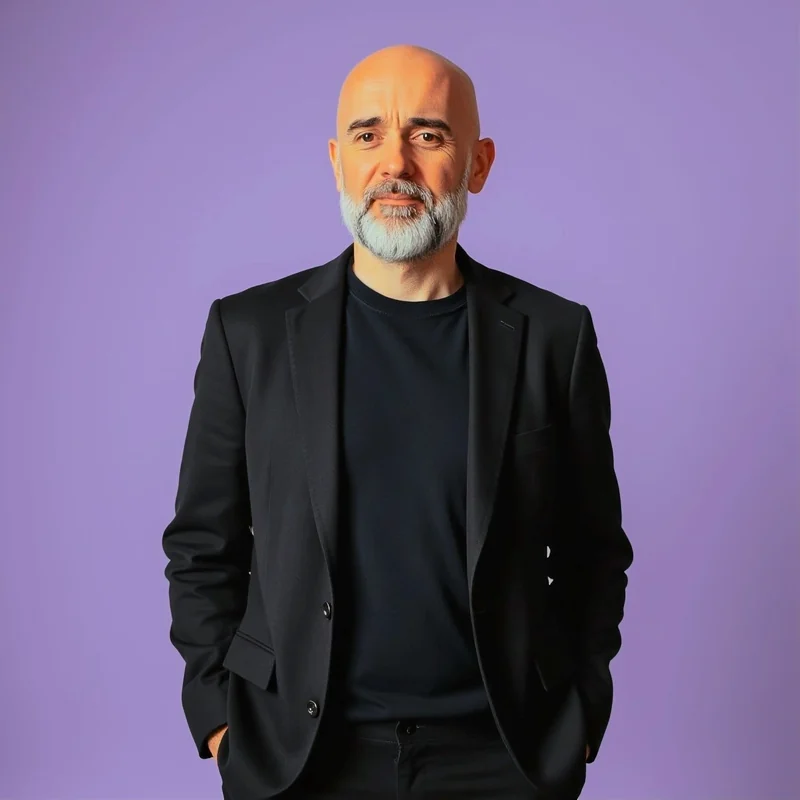
Mark Boyer
Service Operations Director, Softcat
Mark Boyer is Service Operations Director at Softcat, one of the UK's largest providers of technology solutions. His remit is not the products Softcat sells but the services wrapped around them, from service desks to the experience customers actually feel.
A technologist by background who is just as interested in human behaviour, Mark is a self-confessed student of other industries, always asking what customer experience, marketing and service design outside tech can teach it. His view is that the technology industry is behind the curve on service, and that the businesses that win will be the ones that put humans back in the driving seat.
Full transcript175 lines
People of a. Of a certain age will remember. And I like to think of myself as young. Right. I like to think of myself as young until I remember when I'm talking to my kids, that I grew up during the time where the Internet became commonplace in households. And I remember getting my first email address and being able to get those emails as long as my sister or mum and dad were not on the phone.
Yeah.
Of course I couldn't do two things at the same time with dial up. And I remember chat rooms, Yahoo being the place when I was first, you know, surfing the net. And then it became about sort of creating your own websites. And actually the first website I created was in Microsoft Publisher.
Yeah, yeah.
Do you remember that?
Yeah. Front page publisher.
And it was essentially like a PowerPoint document that you then published to a HTML sheet. And I can't even remember how it then got on the Internet. I can't remember what the mechanism was, but I knew you could do it. Yeah. And then we got tools that meant we could create actual websites that were actual domains. This is before the dot com boom. So back then weren't that interested in what the domain name was. And one that came up in conversation that were having and that sent me down a rabbit hole looking at the old days was Geocities. And for anyone that remembers that era, they'll remember that you could essentially bring your life, albeit your, you know, your diary, your hobbies, your. The musics that you like, listening to, the things that you've seen.
You could bring your interests onto a website and become, I was going to say TikTok famous, but that was a long time before TikTok. But you'd become Internet famous for your following and yet days before analytics. I don't know that anyone really knew how many people were following them then or even reading those pages. But I think we're in this space again now. Maybe not as bad.
I think it's massive similarities, you know, I really do. It's because that sign did evolve, didn't it? Because then you went to Faceparty, was it. Bebo was another one.
And of course MySpace, where everyone's friend was. Tom created MySpace.
Exactly. And then the evolution to Friends Reunited and then Facebook were the ones that grabbed users. I was listening to something this morning. Facebook started in that time almost, or were born of that time. And now they're fighting to be in the AI space. Yeah. And all they've got really, in their starting point, okay. They've got the glasses, they've got some technology there, but I'm not sure that's they're going down the right path with that. But they've got the users, they've got the user base.
Yeah, well, that's what, where I want to come back to, because the user base then was, still is, I believe, always will be the community of your customers and whoever your customers are in whatever nation, whatever market you're in. Mark Boyer, thank you so much for joining me today on the guest list. And the reason that I wanted you to be a guest today is because, and we said just before we started recording today that I'm an idealist and a realist an equal measure. And actually I genuinely believe that those with ideals who also put them into practice in real business are the ones that I want to hear from. Mark, you are. Well, actually, I'm going to let you explain your role because I'm going to downplay it because it's much bigger than it sounds.
But most of our listeners and viewers will be familiar with Softcat. Tell us about your role at Softcat and what brings you into the thinking space around community customer growth.
Thank you. So I'm service Operations Director at Softcat and my role is to deliver not the products we sell, but the services we wrap around them. And we do a huge amount of services and people perhaps don't realise that. And I've always been fascinated that services is around experience and not necessarily technology. But when you work in the technology industry, as I have over many years, more than I care to remember, that's forgotten. And actually I'm a firm believer that the technology space, the technology industry is probably one of the worst providers of services or we're certainly behind the curve in what leading industries are doing in the service space. So I'm a techie who's also really interested in human experience and that's.
Where I, you know, when we first spoke, that was the bit that grabbed me and it was like a moth to a flame about how tech and humans have always met somewhere in the middle and how going forward they need to meet more in the middle and maybe one of them wins in the middle, maybe one of them. And I'm curious, I know what my opinion is, I'm curious as to what yours is when it comes to, like this battle of tech, the human and what really wins in the customer experience space. To your point around, you know, service at Softcat and services and any tech company. Actually, I go back to my first Experience with buying tech and I was, you know, a user of tech and I'm a tech geek, I love technology.
But when I was buying tech, it was mainly about hardware, it was mainly about in the business. We needed a new computer, a new laptop, you know, a new server, we needed stuff, we needed physical hardware and that's where I would go to the softcats of the world to get that. So it's unsurprising, actually, when you say not many people realise the breadth of services that you can offer, because are we to some degree in this space still of seeing tech companies as either software as a service online, that's the service bit. Software as a service or hardware. And there's a whole bunch of stuff in the middle.
Yeah, I think over the last probably 15 years, the world's gone through such a change with pandemics, financial crisis, the world businesses have really lent into technology where they've struggled through whatever's happening in the world. I've always seen businesses lead into technology and what separates them. And the pace of the world just seems to have escalated. You know, things are changing so quickly that they need help, People need that advice. So, you know, we are still fantastic selling hardware and we do an enormous amount of that, but you have to get the value return on that. And the big change for me is back when I started working, the technology I had at work was better than the technology I had at home. Yeah, that's flips on its head now.
So actually people are trying to operate with the technology in the business world, with the security they need, the guardrails they need for the protection against all of the various actors out there, but also to empower their people to be as valuable as they can be with their own technology outside of the work environment. So it's a real juxtaposition of how do you take advantage of the investment that you think will keep you up with your competitors or take you beyond them.
That's a really interesting point about the balance between, you know, the power being, or the abilities or the capabilities being at home versus in the workplace. Because you've just said, rightly so. Security and concern around data, security and infrastructure around. If we change this, it changes for everyone and that creates a user training need and all of that stuff. It is much harder and far less nimble, far less agile in the business than it is to just go, I'm just doing this now at home. And that kind of comes back to this world where actually we could do whatever we wanted. And I would say probably 99.9 of people back then that were doing whatever they wanted paid absolutely no attention to whether what they were doing was of any interest to anyone else. So the customer experience was not their focus.
What was their focus was playing with tech and imagining in their head that they had this vast community of people that were reading their blog or seeing their, you know, top 10 music lists that week, or whatever it might have been for them like that in their head, if they were famous. In reality, there might have been a gap in the market. Doesn't necessarily mean that there is a market in the gap. And that, I think, is where it's really interesting in the business space. You said about pace, another P word that I think goes alongside and sometimes is the deflection of pace is what's possible, the possibility. So I think, yes, everything is fast, but also everything is possible, isn't, is now?
And I think this is probably, I think it says that possibility that's changed the game. Because we are, there is no doubt we're at a tipping point in terms of the democratisation of skills and what somebody living at home, playing around with AI can create that they can't create in the workplace. So you've got this new skill set. And I, I, I don't even think we've hit the tip of the iceberg in what's possible yet in that the average knowledge worker is starting to understand and play with. But there are people out there already leading the way and the advancement and the pace of change in what becomes possible day by day is just, I've never known anything like it in the industry. No, you know, I, I struggle to keep up with what's happening.
I'm constantly listening to podcasts and reading just to find out what's changed in the world of AI day by day, because it's moving all the time and I think the opportunity to grasp that and what that brings, we really haven't fully understood in that world.
Of opportunity and possibility, because, you know, I've told you this before, but people that know me know that I'm neurologically spicy and I have my squirrel moments and there'll be a path to go down. And it might not be the right path, but I'm down it, like. And one of the things that I have to do in this world where everything's possible is consistently and continually remind myself that just because it's possible, it doesn't mean that I should and it doesn't mean that I should get distracted from what I'd said I was going to do and what was possible yesterday.
So it's trying to stay focused, which means accepting that I'm going to miss out on some things because I just don't as a human, I don't have the capacity, I can't be across every tool and learn every new thing and be up to speed on everything. Someone said to me about eight weeks ago, can't believe you're still using ChatGPT and not onto Claude. And they were like the fourth or fifth person. So I shifted on to Claude and went, oh yeah, look at what I can do here and I'm sure I'll flip flop.
I. I'd almost challenge you on that and I'll tell you why. So I love the term that you use, that spicy term. And actually I've got a massive interest in looking outside of the industry that I work in for lessons and learnings and what can I take from that? And recently I went south by Southwest in London and listened to a number of different marketing talks and the thing that really stood out for me is people who are different, who think differently, are going to find the keys to take advantage. Because, yeah, it's great, AI is a democratisation of skills, but it's also, I've used this phrase before, it can lead you down a path to a consensus and mediocrity where everybody's doing the same things because they're using the same tools and getting the same outputs.
And you can see that day in, day out on LinkedIn, you see that all the time. You know, everybody now knows that's AI. You know, just there are always those little signs. It started with the M Dash, now it's in all content.
That's all right list, isn't it?
You know, so it's really obvious that we go on that path. But it's. The best ideas are often the ones I think that might be the wrong ideas or perceived as the wrong ideas because there's a pressure. You know, business environments tell you data is king, you know, follow data. Data is not a prediction of the future, it is a record of the past. Yeah, yeah. And I think this is the opportunity here is by, by that creative thinking and different thinking are the ones that are going to find the pieces that we don't yet know about, that we haven't uncovered. Because I'm adamant that most of people using AI now are just doing what they've always done quicker.
Yeah, not Necessarily better without typos.
Yeah.
And arguably some people are saying programme into your AI models, tell it to make typos.
I think it looks, I mean, what is that? Right, that's.
And that's it is to. Because I think there's still a bit of a stigma with some people around. If you're using AI, you're cheating or it's fake and it doesn't have to be fake and it doesn't need to be seen as cheating. But it's almost like isn't it cheating to pretend it isn't AI by putting typos in it and make it look more anyway, that's a debate.
But it's two camps. Right. There are now companies out there. If you're not using AI, you're not the right person for them. Sure. So it's really. Yeah. There's real split.
Because you said something used a term a moment ago, you said about the average knowledge worker and knowledge work is really interesting because of course knowledge worker, it's it. Knowledge worker becomes the lead that uses AI but need. So you AI, you know, you can use AI to learn and get more knowledge and read up on stuff. And then arguably also without some pre existing knowledge, you don't know whether what you're reading is the right thing that you're reading. So there's a whole debate there around the truth and the unbiased truth. And that's again, that's a much longer conversation on another day. But a knowledge worker has a difference in thinking and behaviour. That's why they are a knowledge worker. They have learned their craft and they've added their opinion. They are thinking about what might come next.
They are using their knowledge and expertise and credibility to build a future that will of course use tech and they will use tech to help them shape and craft that future. But the difference and what you noticed in those keynotes at South by Southwest, the difference in those knowledge workers is a diversity of thinking and behaviour in humans.
Yeah.
And that's your thing. Right. So you said a moment ago as well, but always led with technology. And that's true of many organisations. Lead with tech, lead with the product, lead with the service, lead with the thing that you're creating that's tangible, scalable and salable. And the people are your greatest assets. They are the humans. So what, when did you decide that the differentiator was people? Was there a decision like when was the change for you being a techie that got you looking at the human side of it?
I Do I think it was largely at the point with technology changing outside work versus in work, when the limitations flipped and I could do more and I realised the impact technology was having on my life. I'd say it on other people's life. I think, you know, I think of my grandmother, she's 98, has an iPad, FaceTimes, and the conversations I'd. I'd have with her, that's. I mean, that's incredible when you think about what she's seen in that time, in those 98 years, the change there. But that's a real life example of where technology has changed somebody's life for good. Her brother, for instance, lives in Australia. She's never been there, she's never seen him since he left and went there 60, 70 years ago.
But suddenly, instead of organising a phone call once a week on a Sunday when it's cheap, and hopefully we both remember, you know, they're FaceTiming, they're seeing each other and having conversations they could never have. So I think at that point, you know, there are big brands out there that have been very good at using technology. You know, not always being first to market, but making it really resonate and connect with people. And yeah, our lives have changed so significantly. Our attention spans now, you know, isn't always a good side to our attention spans. Would I hear, listen to a podcast now? I think our attention span on our phones has gone in the last few years. From two minutes we'd be one app. Now it's about 40 seconds for already moving on, which is.
That's not great, but it's real life, so you've got to adapt to that. So I think it's that realisation that technology is in all of our lives now, that when you're delivering services, that's what the comparison point is. Yeah, not your last experience with the service I provided you. It's all the comparison of everything you do in your day to day life. It has to match that. So I think that's when you. When that. When that technology balance flipped between. My experience outside of my employment is better. With technology, we've got to find a way to catch up, you know, that's the challenge for everybody. I think that's a challenge for every business. Technology's got to disappear. It's got to be. Yeah, if you know you're using technology often, it's because it's hard, it's difficult,.
It's almost like, yeah, you don't want to know you're using it. You using it, but you don't realise, I can't remember where it was, but recently, the forecast or the belief that at some point the AI chatbots that you're using will actually be able to read your mind. Now, of course, that's a big term and a big statement. What does that really mean? Well, it means that it will have learned enough about you that it can start to guess what you might be thinking based on. Normally, at this time of the day, David is in this kind of mindset, so maybe I'll prompt him about XYZ and you'll be like, I always remember when I do personality portrait work, people read their personality portraits and they god, it's like someone's been watching me.
No, it's because all of the data, historical data, is so vast about humans that at some point it becomes really predictive based on, you answer 124 questions and then pretty much we can, you know, have a pretty 99.9% good guess at how you might show up and present in certain situations. So I get the obsession with humans and really, from a commercial point of view, actually, so it's not just, you know, I don't. It doesn't strike me as this, you know, ideological. Let's all start hating on tech and make it invisible behind the scenes. Because we just need to put humans back in the fold again. It's. Without putting humans back in the fold, then we're creating tech for creating tech's sake and we're not thinking about who it's for, what it's for, and the user experience.
Stepping back a few steps, though, back to the humans that are going to create it. Because I think in the noisy world that we're in, so all those distractions. 40 Seconds here, onto that, onto this, onto that in that world, it's so noisy that something, before I buy, has to stand out as a differentiator. And I believe that's humans. How do you see that? Where people want the tech and they want to know what the tech can do, and if you're in the tech space, they want to get there and get there fast. How do you mobilise and amplify the humans to differentiate you from the rest of the noise?
It. The phrase we're using right now is white glove moments.
Right.
And that's an evolution from hero moments. The way this is where. Where I differ from perhaps my. My sales colleagues, because where. Where salespeople excel is being that hero, solving that problem. Yeah, that's often the difference between a Good salesman and a great one who understands what your problem is and finds a solution and brings that solution to you instead of just trying to sell you a product without really knowing what the problem is. And I think that's the difference. But in the services space, that doesn't work, you know, because what you want is a consistent level. You want predictability. The challenge when you're taking a service is customers want consistency, they want agency, they want to know what they're getting. And when things go wrong, it's not necessarily what's gone wrong is a problem. It's the uncertainty of not knowing.
It's actually you've lost control. You don't know what the issue is. So when you're a hero and you run into that fire to solve it's great you're setting the experience here. You then can't maintain it because that's dependent on people on how they're feeling on a certain day. But the difference has got to be taking those hero moments, turn them into white glove moments. And that, for me, is the difference. You know, when I talk, this is a classic Rory Sutherland phrase, who I love. It's that difference between walking into a hotel with an automatic door, walking into the same hotel where there's a guy with the white gloves who opens the door for you. Two completely different emotions. But you can do that piece of opening the door every day consistently.
So the difference between just happening to be there and opening the door once versus doing it every day, that's what we're trying to do. The consistency is human emotion and how you can make somebody feel. And you can do some of that with technology, right? Is often the first time you see new technology, you're like, wow, this is amazing. But then it wears off, and you've got to put something in there that maintains that feeling that this is fantastic service. This makes me feel good. All of the things that people want when they're consuming a service.
I love the contrast between hero moments and white glove moments, because a hero moment is acquired in a time of crisis. And in that time of crisis, largely speaking, the customer knows what crisis they're in. So there's a premise there that the customer knows what problem that they have and that the sales team are the hero that comes and takes away that pain and solves that, you know, brings a solution to solve that problem. The white glove moment is partly like the. The before that happens in the first place, so that people feel. Emphasis on your feeling point there, that they feel, in the right hands, safe, comfortable, Trusting in those that they choose to partner with and work with, so that if those moments where they need a hero arises, they know that it's going to happen. It's going to.
So almost like, you know, I don't have to worry about the crisis because I know it's going to be covered because of the white glove experience I'm getting from my service provider. But there's also something really important about when customers don't know what the problems might be and, or are and. Or might be. And you can only do that with agency, with humans who can, in a trusted way, help you explore the what ifs of your world from a place of curiosity. And I, I'm. I'm. I'm obsessed at the moment with Columbo in the world of customer experience and how curious he was and how we should be more curious, be more Columbo in the world of customers. Yeah, Just one more thing. And a lot of.
And I don't want to speak ill of salespeople, you know, they're my tribe and I work a lot with them and yet they're not as curious as they need to be.
Yeah. I also think, though, this is where we start getting blurred between what AI is capable of and how we use AI, and that pca. And it goes back to the chat bots. I think people are starting to notice now that the behaviour of chatbots never quite want to end the conversation, never want to let it go. And it's not actually they're Columbo. They are. But they also want you to keep spending money.
Oh, yeah.
You know, that's what they're trying to do. They keep you hooked in with. You know, we could do it a little bit better. We could do one more thing. There's always that one more thing. But again, that behaviour can be trained and changed and I think there is that journey. You know what? White glove moments are going to be expensive because they are your. Your best people who are fantastic at looking after customers, but that can be an expensive solution. So it's that balance between using AI and your people. And I think that's what is really going to set the winners and the losers apart, because there's so many right now. AI is going to save us money because I don't need as many people. I completely disagree. You need different people with different skills that are more human.
And how do you enable your AI to work? You know, there is, again, when you've got that problem in the IT world, this is where my premise comes from, that we're Terrible at delivering service is if you're a payroll analyst on the last day of the month. You're probably working at home now. You're in the coffee shop, you got 300 people to pay. You sit down, open your laptop, it's not working. Somewhat not working. How do you get help? You ring your IT service desk, or worse, you. You have to log into a portal, which is, you know, it's like your house is on fire and you got to do a tax return before you can get help. It's. It's horrible. And when you're putting your details in, you're not actually telling them what the problem is.
You're being asked to translate your immediate, your emotion, your fears, your challenge into a taxonomy to suit an IT department.
Yeah.
You know, and where that translates then is somebody sitting there on a Friday afternoon at 3 o' clock and they see your ticket come through. You know, ticket, like the old days when you go on a butcher and you take a ticket and wait. You turn in the queue again. Even that is wrong. It shouldn't be that way today. But they see it and they see, okay, a laptop's not working for one user on a Friday. They're probably logged off. It'll wait till Monday. Completely missing the context. So this person sitting there with 300 people to pay, that could be 300 people who on Monday can't pay their mortgage. You know that is missing. That's where AI right now, you know, chatbots are the first iteration of AI, and I think that will change enormously over time.
I don't think we've nailed what the real user interface is yet. But right now, that's that human conversation they can have with you. You can tease that out and actually you can hide the fact there's a ticket. Right. If you need a ticket to run your ways of working, then great. But you can, you don't need to tell a customer, hold your ticket, because then they're managing their own problem. So I think this is where we can start to evolve and improve that experience. So that context of imagine, then you're talking to your chatbot and literally talking, not typing, but you're talking to them, and you say, hey, I've got 300 people to pay. I can't. My laptop's not working. It can ask questions in your Columbo way. One more thing, it can feed that into the background.
Then you know, I need a white glove moment. That's when you know, you need your people to step up to solve the problem. You're not leaving that in the hands of AI. And that blurring of the lines for me is. That's the exciting piece.
Yeah.
You know, the context, taking that context and know when to switch it.
As a user, just what you've just described there feels like a. A level up that's available already and I've not seen yet, you know, that, you know, we've all been there. We've been on a website, either as a, a consumer, direct consumer, as an individual, or as part of our business. We've been on the website, we've logged onto the live chat because we haven't actually got time to stop what we're doing and make a phone call. So we've gone on the live chat and we're dealing with the virtual assistant and that taxonomy, that variety that you've just spoken about. There is the five to 10 questions that I've got to get through first. Yeah, at my expense, my time, my tapping away.
Like back when automated IVRs on the phone started, it's those moments that you just said absolute gibberish for it to say 10 times, could you repeat that? And then eventually it will say, I'm going to pass you to a real human. So sometimes we do that with live chat, we just want to be passed to a real human. What if we did use the voice chat instead of type? What if it was just a conversation with the AI chatbot to understand the nuance to ask the Columbo questions and then say, this is in the taxonomy. This is a white glove moment. I'm going to connect you now with Mark and he's going to take it from here. And that, I think is so different to what we're seeing and yet already possible, already doable.
Yeah.
I want to go coming back to where we began and the spectrum between where you've got pace and possibility and vast array of customization, if I call it that. Right. Because customization is just whatever you want it to be, it can do. But if you're the one doing it for you without any real context of your customer base, then it ends up. And you, I know you've used this term in the world of individual chaos, everyone's doing everything and they're all doing it differently. And that's chaotic. That's the world of geocities that we remember when these things started.
And then we wanted to bring in consistency, which takes you down a route of feeding the taxonomy of what it need because that's the way the System's been set up and then you've got the middle ground, which is the white glove moment that brings it all together. You talked about guardrails, guides, like the. The boundaries, the parameters, but what are those going to be that allow individual chaos at a thinking point of view to bring out difference and ideas and solutions and consistency at a scalability point of view. What are the guardrails that mean you can have both?
So I think largely a big part of it is people still, but it's what are your people doing? And I heard this phrase, it goes without saying security is critical, even more so with the current advances. So having guardrails around, security, control of your data, all of those things are really important. But the role of your people will change. And I had this fantastic term recently in that people already switching their jobs, these knowledge workers. In some instances, they're either bots sitting or they're botting. And that's because they're either sitting there constantly feeding a machine to do the work for them. And actually, you know, you almost start losing some of that time and that's where definitely you can put some efficiencies in place.
You know, somebody sitting there, constantly prompting, because actually, when they're not prompting and they're waiting 10 minutes for the output, what are they doing in that time? So you're not really getting the best out of your people doing that. So I think, you know, that's where you start thinking about organisational structures, traditional versus what does the modern world look like? But then there's also the bit you referenced earlier. How do you know what comes back is true, is valid? You have to validate what you get back and you can't do that without knowledge. We had this challenge when the Internet came along, you know, used to remember again, back in the day, the constant phrases. Don't just believe it because you read it on the Internet. Yeah, yeah.
Now, what if Google told you?
Yeah, yeah, exactly right. And we're in another evolution of this. So always making sure you validate what you're getting back. You know, it's not perfect, it makes mistakes, it hallucinates. So you know what you do in your day to day job. And I found this recently with my teams. I've put a lot of time in with them, moving them beyond the. Write this email for me, summarise this email, record the notes for this meeting. That's. That's the basic stuff everybody's doing. But there are.
I don't think they are. Not everyone, but that's a debate. For another day. I think, I think you're at the end of the spectrum where there and in place and so many people are just starting to dabble with the idea.
Yeah. Actually I think, you know, I think you're right. You know, I'm probably in my own echo chamber. You're kind of at the forefront of it, so I see it more and you make that assumption, everybody's doing the same. But I actually think you're right. I remember seeing some research on LinkedIn around knowledge workers. I was. What I found really interested in that is actually where it's. The uptake is most is in countries where English isn't necessarily a first language and it's the democratisation again of language that is giving people the ability to play in different parts of the world where English is the dominant language. So it's having again, it's reducing or increasing the size of our worlds.
Yeah. So the size of our world is a nice segue into what I talked to you about before and where I think customer experience is really key and it's what happens in the room. Right. So the world is a big place and actually the rooms that we work in and the rooms that we serve are small parts of that really big place. That's where I'm really curious because you don't necessarily know who's in the room that you're in and that you're serving. You don't know who you want in the room sometimes. And that's that age old marketing question. You know, every marketing agency would say, well who's your ideal customer profile? And it's, it fascinates me how few businesses can really articulate that clearly.
And if they can articulate that clearly, is it a really accessible market, small, the smallest assess accessible market that helps you with your marketing or is it just a. Well we serve businesses. So any business too big, too fast. So the room itself is where the experience begins, but you don't know who's in it yet sometimes. So tell me, I guess with that room metaphor, when does, when do people enter it and who's entering it and how do we know who's in it? Like there were lots of questions there. But tell me about the room.
So I think really interesting. I think we have something like 11 and a half thousand repeat customers across all of these rooms, vertical and all of these. And how, in terms of how do we particularly know who's in that room? We still use people. We've got fantastic people who are focused on just particular Rooms industries and verticals, who they go and talk to people. It's still about that intricate knowledge. You can go and do all of the research you want with the tools. Right. That accelerates it. When we're launching new services, there's a huge research stage that goes on which is still driven by people. That interpretation of what you're getting. Because it's again, my entire theory about data. Data often tells you the story you're expecting to be told. It's very easy to. To use data to reach the conclusion that's safe. Yeah.
Again, going back to the old saying of nobody gets fired for buying IBM, nobody gets fired for presenting the decision supported by data.
Yeah.
I think that is where I think the difference is going to come because yeah, what we are going to see is empowering small businesses are going to be have the ability to level up because their speed of research, their capability to research at pace. So there's definitely going to be a levelling up with competing of big organisations or the constraints they have versus the agility of smaller businesses. That's going to be a really interesting dynamic over time and that's great. But I still think it's the different ideas that is going to separate you.
So it's the ideas that interests me because. So you used to. I'm going to paraphrase, but you talked about, you know, the data will. The story that the. The data ends up telling you is the story you already had. What was the phrase that you said that it is?
It's that safety and data. Right, yeah. The safe. The data will often tell you the story you're expecting to hear. It validates your own.
And the reason it validates it is because the story you're expecting to hear is based on the experience you've already given and the data only backs up what's already happened, I. E. The experience you've already given. So no surprises. That the data tells you what you already know because you were there when you were doing it.
Exactly.
What comes next though, comes to the idea. It's not about what the data validates, it's about what the validation of that data gets your people thinking about. That is different, that is new, that is change, that is growth, that is completely customised and consistent in equal measure and the middle ground being the white glove that brings it all together.
That's.
That's the difference, that it's the ideas, isn't it? That's what we want.
It is, it's. You know, your data tells you what you're doing what your competitors are doing. Yeah, It's. What are the gaps? What are the people? You know, what, as a human, as an experience, what. What's missing from that? What are the gaps that. That's not telling you?
So, again, I've said this already today, but the. If you find that gap and you find that there is a gap in that market, it doesn't mean that there is a market in that gap. And now we're in this world where everything's possible and you can do everything. You created an app for your Garmin smartwatch the other day, right?
Yeah.
And it then. Well, tell us what it did, why you created it, and I suppose importantly, why you're here today talking to me about what we're talking about. And you're not out there on a yacht because you've built an app that sold for 40 billion. Like, tell me why you did that, how it was possible. Not necessarily the ins and outs of the tech, but then why that hasn't become your latest obsession?
So it's, you know, it's really interesting the way you. You sort of articulate that, because there's a real clear answer to each. The first part of doing it was learning, curiosity. Could I do it?
Yeah.
And the reason why I did it is because I've recently switched from an Apple watch to a Garmin watch. Right.
Tell the Eye that you've converted.
I've still got both.
Okay.
But, you know. And again, why did I do that? Because I wanted something that looked more like a watch. Just. Just. It's round and, you know, and a change. So really simple things.
But.
So there is no app for controlling my electric car. So on my watch. There is on my phone, but not my watch. So sometimes it's useful to see the charging state. Cool the car down before I get there. So, okay, let me see. Let me see what I can do. And I did it entirely with Vibe coding. I've got zero coding experience. I wouldn't even know where to begin. Which, you know, it's embarrassing working in the tec, but that's never been something that's been successful because you've always had.
People that can code for you. So let's not be around.
That's a good way of looking at it.
Yeah.
So over a couple of days, I sort of experimented. And the way I was doing it was really about, how do I want this to look, how do I want it to act, what I want it to do. For me, that was the conversation I was having when I did it with Claude code. That was the conversation. I was using plain English language and not always good language. You know, sometimes it was very tenuous about what if that just was green? Or, you know, really simple stuff and. But at the same time I was like, okay, give me a. The car I've got is a Porsche. Give me a Porsche brand type design so it looks Porsche like. So even those nuances of saying look, I want it to look real authentic.
And I did that and over a couple of days ended up with an app that works really well. Why haven't I sold it? Because what I learned in this process is what I can do personally with this out. When you start thinking about the guardrails, the security, the responsibility I have to put a username and password into the code. I can't ask. You know, actually, number one, I don't think there's a market for this because I need two things. They've got to have a garment.
Yeah, they've got that request. Can I have that? How much?
Yeah, that combination of. Got to have two particular products for it to work. But I also found out that somebody's ahead of me on this because there's a limitation because what you can do as a personal, individual user. So I've got access to the API I need from Porsche to get the information back from my car that's not available commercially. Because if I'm going to do this in a safe, secure way without the risk and the liability to myself, there has to be some security controls, the guardrails in place. Once you do that, there's a limitation to the usefulness of what comes back. So somebody's ahead of that. Somebody's already thought, well, you know, that balance between giving people the autonomy of the data and what they want, control of the product that they got versus them being able to commercialise it.
And I think that's a real interesting dynamic because, I mean, we spoke about this offline previously. I think the next big change is around UX and UI and that's where we'll go. Because all I've done here is I've created a UI that suits me.
Yeah.
And I think that is going to be the next evolution of products and services. How do you want to consume them?
Well, and so what's interesting there, and I'll come back to your comment before, around the sort of the automation side of servicing, like the ticketing service, which does need to understand your human nuance. Like it's not just a broken laptop, it's I can't do payroll on Monday. Like, that's a nuance that isn't in the taxonomy of the ticket request that does need to. And the. And the simple fix. And there'll be people watching and listening right now thinking that's what I've got to do. I just need to go back to my ticketing tool and add a voice layer in. Like, maybe we can edit this bit out, keep it, we'll commercialise this ourselves. But the point is that's a difference that can make a difference. The UI and the customization of ui. Like, we see this in lots of things.
Like, you change theme, change the skin, decide what you want on your dashboard. If you're using CRM like HubSpot or Salesforce, you can customise within the customization remits. What if there was a setup, a voice chat setup that could customise to any degree within the guardrails of the system itself. So you can't change the features, but you can tell me you want the dashboard to look more like the Porsche look and feel. You can tell me that you want, you know, page one of your wizard to be a. Tell me all about you first. So that everything that comes next is rooted in that level of context. So maybe there is a step that is already accessible and already available that just brings UI and UX back into the kind of fold, being back into the. The design element. And design is subjective.
Like we think of design as visuals and it's not just visual, it's everything. It's. The whole experience has got to be designed intentionally, hasn't it?
Exactly. And I think this takes us back to the GeoCities piece, right? Because good design is still good design and that won't change.
But so are we saying Comic Sans and every colour in the rainbow on a website is out? Is that what we're saying?
Everything goes in cycles, right? It could come back. Everything goes in cycles. But no, you know, what you've just described, that is already out there and people can do that, but should they? You know, and I mean, it's that mix of. In services industry, outside of it, everybody's looking. Or the assumption is I shouldn't, I should validate that hyper personalization is a real world word. And you know, in terms of what people think is a differentiator in services right now. And again, I think that is. It's about tapping into emotion. I want this to feel like it's mine, I own it talks to me. So if, yeah, Again, I think what you described is already available. It's very clunky, it's very difficult not for the average user to go and create their dashboard.
Yeah, there are lots of ways of doing that, but what we'll see is lots of the same dashboards, just different colours, you know, masses and masses of geocities type websites and dashboards. Again. So again, good design is still good design. It's really interesting that, you know, some of the big frontier AI companies are launching design products. I still, yeah, I've seen some stuff created with them, but I still don't think you can take away human taste evolves. You know, what looked good in the 70s wasn't popular in the 80s. You know, these cycles of humanity that change what people want.
Yeah, human taste does evolve and it is wonderfully, somewhat scarily subjective. I could go into someone's house and think, God, this is disgusting. And yet they love it and they wouldn't sell it to anyone for anything. That's their house and they love it. So what you've just described there in terms of hyper personalization, it doesn't matter to the user whether anyone else likes it, as long as they love. Does matter commercially, to create an experience that can deliver that hyper personalization without tipping everything over and without also without making what you've done for someone look like crap to the next person. Like if I walked into someone's house, they loved it, I hated it and I said, who did this? And they gave me a name, I'm not going to use them then. Even though that person might be like,.
Well, that's what they wanted.
It's not. I've never done that for anyone else. That's, that's what they wanted and that's my job is to understand their desire. So that's a nuance that's really difficult. Deliver hyper personalization, yes, but not in a way that it upsets your brand reputation.
But a good brand elicits a feeling, doesn't it? Yeah, I think there's something I've always, you know, we talked about personal brand and things like that. I think, I think brand is overlooked, particularly even in the services space because, you know, Apple, everybody thinks about Apple is a premium product and. But that is because of the brand. They've established a brand. Their products don't do anything more than anybody else's products, often less. Exactly.
I'm an iBitch.
Yeah, me too.
No, you're not a real one. You've got. I'm not having that. I'm not having that. I'm a proper ibis.
But the brand, you know the way that, the way they've set that brand out. And I think that's an important lesson as well. Right. You can take people on a journey.
Yeah.
And create the brand but then also give them the option of hyper personalization. But you can still steer them with your brand. I think, I think is the winning brand.
As you said. Elicits a good. Elicits the right feeling. I was going to say good feeling. It doesn't necessarily need to be a good one because a good brand could also elicit a negative feeling that then a hero can come in and resolve.
Yeah.
But if a brand elicits a feeling is one of the things a good brand that's is a, is one of the things that a good brand is eliciting. There's a lot of words that the feeling of safety within your individual chaos. So if you want your world to be the way you want your world to be hyper personalised to your tastes and your preferences the safety is that we've done it in such a way that it remains true to the taxonomy, true to the world that supports it and the service that we offer everyone. So it's just flipping the lens, flipping the focus to that.
But, but then tying it back into that whole idea. I think I said at the start about the things are just completely different to the assumption of what everybody wants and hyper personalization. There was a brand recently. I can't remember what they were selling. It was ice cream or something or coffee. It may have been. And they only did one coffee.
Right.
Coffee shops everywhere and you can have any type of coffee you want. You know I'm seeing Spanish latte is apparently the most popular one coming into the market now. But I have an espresso and this pop up coffee shop. They just did one type of coffee and that was their brand. We only do whatever it was Americano and it went viral because the complete opposite of the assumption that you should do as many things as possible. You should have a brand that makes it cool, that sets you apart from all of the chains and independent. They threw that out the window.
Yeah.
So we do one coffee like it or lump.
And the main thing needs to be the main thing.
Yeah.
Go. Go niche. Go laser focus niche. Do one thing. I, I Coffee's an interesting one. I'm, I'm a bit of a coffee snob. I do like myself. I'm a cappuccino drinker so it's not I'm like an unusual coffee snob, but I'd like my cappuccino and I like it done nicely by a proper barista in a nice artisan coffee shop. And I believe that a nice artisan coffee shop has one job and only one job. Make coffee. Yeah, and make nice coffee. So when I go into an artisan coffee shop and I see them trying to launch a range of this or a range of that, it's like, we're trying mushroom teas today. No, you're a coffee shop. Like, let's just stick to the one thing that's the one thing. So that, I mean, that's a conversation for another day.
Like, some jobs are just, you got one job. I come back to the feeding bit again that we just talked about. And eliciting the right feeling, good or bad. Sometimes the best customer experiences are delivered in a moment of negative emotion. So actually, where a customer is experiencing a moment of dread, sometimes we think that, well, software has to save the day because it's accessible. 24.7Reality in the White glove world is that a human being saves the day to a degree, or at least provides a feeling that you are being supported in those moments of dread. And tell. This might not be in a moment of dread. I might be massively overplaying and catastrophizing your world a little bit. But tell me about your experience with the Oura ring and when that negative moment led to a white glove moment for you.
Yeah, exactly that. Yeah. I've been wearing an Oura ring now. I think it told me for. For a year and a half the other day and told me how terrible my last six months have been. But with my. This is my second one. With the first one, I noticed that the battery life was dropping and I just put up with it. I thought, okay, maybe this is, you know, how can you put a battery in someone this small anyway? That's incredible. But after a while, it started to get frustrating having to charge it. So looked for support, opened the app on my phone and the only path to support was a chat window. So I opened the chat window and immediately it was AI. And I just felt that feeling of dread because I did not want to have to talk to AI.
My feeling on that was, oh, God, this is going to be painful. So I didn't even type in a sentence. I just said, battery. Five days to two, thinking, let me get past this. It won't understand me or pass me on to somebody, a person. And it didn't. It just fought for a second and Came back and said, can I do some diagnostics again? I'm like, okay, we'll get past this bit as well. So I said yes, and then left it. And the lights started flashing on the ring. There wasn't much happening on the phone. I was thinking, okay, I might have to restart this. Two minutes later I got the next message was I found a problem with your ring. But don't worry, we've already shipped a replacement to you. I thought, wow, that's that.
That I'd literally gone from how do I get out of this process to this is fantastic. I've never had an experience like it. That elevation, that emotion delivered by AI, that was a difference. But then it went further. I was delighted. That was incredible. Yeah. I think it asked me one more question. Can you confirm this is your address? And that was it. But then a couple of days later, I mean even set my expectations of it'd be something like four days or something else blown away. But two days, three days, four days later, I got a call or an email from a real person. Just say, hey, just checking in, is your new ring working okay? Got any problems? Can I help you? That's a white glove moment.
A real person, you know that was the only interaction I had with real person and that was that for me. Now that's my benchmark.
Yeah, yeah.
Everything else I, I have in again, whether I work or personal life, that's the benchmark now for me and that's the same for everybody else. The best experience you have with a problem becomes your benchmark and that's what you're always measuring against.
And so thinking about the business world, the best experience you have with a problem personally directly translates into what we should be doing for our customers. And there'll be differences in the way we deliver service and what our product is and all of that, who our customers are, but it's that level of thinking, customer thinking. You know, our business is all about customer growth. The guest list is with people like your good self talking about, how is it we as organisations in today's world continue to win the business we want in the right way, the ethical way that sets us up for repeat and not just a one off hit, you know, hit parade where we've got a customer but they'll be gone tomorrow because they didn't like what we did. Like, no.
Win the right business for the long haul, we've got to keep customers loyal. We've got to keep delivering a service that exceeds expectations. That customer experience matters. Otherwise, we won't keep them in the room, in the party we invited them into, they'll leave. I always talk about the red carpet that leads to the party. Don't let it go straight to the back door, because the back door is where we've lost customers, and complacency is often where we've lost customers. If we become complacent, we won't do the third part of the whole simple customer growth model, which is grow the revenue from your existing accounts. Those customers that have, you know, came into the room willingly because what you offer, the service that you deliver, the marketing that you've promoted, everything said come into this room, it was. It's a great party.
And they came in, maybe they enjoyed it for a bit, Maybe they still enjoy it to a degree. And yet they've not grown in years. They've not like three years. Everyone loves them. They love you as well. They love the account manager that they're working with. Everyone says, this is a great customer. This is a great customer. And then your CFO says, might be a great customer, but it's very static. It's not growing. And there might be nuances and many reasons for that. But why does being loved not just serve everything? That's. Why is that not enough? Like what. What needs to happen to grow customers in today's world, we're just being great and being loved is just not okay. It's not enough. That's good.
So I can talk about that from what we do from an IT services perspective. And it's people orientated again. And particularly, it's something we lost off the back of the pandemic. You know, we all work at home more. We go into the office. Earlier in my career, I would spend an enormous amount of time on customer sites, probably more often than was in an office.
Yeah.
And that's the piece I think we're trying to recapture now. Because it's loving a customer. Yeah, we're great at that. But actually, do you understand them, understand their problems from my perspective, delivering the technology services that we deliver. What I want to know and understand is the challenges that the customer is having, not just with the technology. I want to be able to help them demonstrate the difference that, you know, I'm often dealing directly with technical people, IT departments, people like that, and they struggle to articulate the value. They're an overhead, they're a cost. How do they turn that into a real value, into the business? So, number one, I think you always. You have to know what. Who your customer Is if you're in the technology world like me, my customer is not my end user.
My customer is the same customer that end user servicing number one. I think that has to be, has to be the case. But it's also the language we use and how do we translate the taxonomy that we use to run our technical services into something the business understands and is meaningful to the business. So embedding people with your customers really understand spending time knowing their business inside out. Mind nirvana is being in a place where a customer asks us something and we come back to them and say, I'm not quite sure. You have to explain that to me because I know your supply chain, I know your business value canvas, I know your unique selling points. I know your business plan for the year. I can't quite align this. So what's changed that we don't know?
Or perhaps is this the wrong thing for you? That's that intricate knowledge that I think we are striving for, that you can only get from those relationships because a.
Good business will say that it's beautifully reactive in serving the customer's needs. And yet what if they think they need something and they don't? What if what they think they need and they've asked you for, you could deliver and you could deliver it fast and you could deliver it at pace and all that. It's wrong for them. And do you have the ability to have those conversations and challenge and get curious as to what might change? And I always want, we, I'm guided by principles in our work and we have a number of principles that form, that blueprint, that roadmap. And one of them is fundamentally clear. And it's that if you should. And every, I believe every, not just customer facing, I believe every person in every business should have this in their job description as a single line.
And part of their job description is to become an expert in the customer's world.
Yeah.
If you become an expert in the customer's world, then sales and growth become a downstream result of that level of understanding, that level of partnership, that level of relationship, the dynamic that leads you to be able to say, you sure? Because what I know about your plan is, so what am I missing? Of course there's an execution of that that is needed and the skill set, a human skill set that's needed. So you don't, you know, tread on the eggshell or you know, something even more valuable and crush it. Because your clunky wording is like, are you stupid? That's not Your business plan. Like, you can't say it like that.
Yeah, yeah.
So there's a skill set that's needed. But if you do become an expert in the customer's world, that's reporting on their stuff, not yours. I know you talk about this a lot, right? It's about reporting on them, not. And you know, you don't have to look at many consultants in MySpace to hear the words, the customer doesn't care about you, because they don't. And that sounds really harsh. They don't. They care about themselves. So you need to care more about them than they do you. So I guess, tell me, beyond that being a notion that I think everyone will go, yeah, I agree. How do you become, how do you make it a reality in teams and in businesses so that they live that notion? They do it, become an expert, go on.
It's relationships. It is a hundred percent relationships. So one of the things I've always tried to encourage is traditional model says you maybe have an account manager, a sales lead who holds a relationship with a customer. I think you have to have multi tier relationships. So if I'm delivering a service, involves a service desk, I want those people on, then they're not the end of a phone, they're not the end of a computer, the end of a ticket. I want them to have a conversational relationship with their peers in the customer because that is where the nuance will come in. You will learn things that you just won't get through an automated process.
So I think there are multiple levels of relationship, probably 3, 4, 5, depending on size of the customer, that gives you the insight then you need the systems, the ways of working that brings that all together. So I think 100%, this is that mixture of where we can get better at that with AI, but you can't do it alone. You have to have people. These are the white glove moments, this intricate knowledge, we can add that to our industry knowledge, the power that gives us to deliver to those customers of knowing their business, knowing their industry, knowing the technology that's available to them, that's where we can really make a difference.
That's where I think bringing those things together, those organisations that just focus on technology, you're always going to be playing catch up, or worse, you're going to be in a race to the bottom of, say, a consensus. And mediocrity.
Yeah, don't like that, do we? Mediocrity, absolutely. There's so many other areas that I'd love to explore today. And one thing that I like to do with any guest that comes onto the guest list is ask a bit of an uncomfortable question. I call this the ugly mirror moment. Right. And I believe that the best people and the best leaders in business are comfortable staring in the ugly mirror. Uncomfortable to the degree that whatever they answer is just the truth of their answer. And that's okay to say, even if it makes us sound vulnerable or.
Or.
Or not good enough at something that we need to get better at. So I think that there's a growth moment in this ugly mirror. And I know I asked you to, you know, subscribe to the notion of me asking this question, and you said you were okay with it. I hope you're still okay after I've asked it. So it's the same moment every episode. And I'll ask you a simple question, and I'd really love you to dig deep on this. What is the thing in your business or in your echo chamber maybe might not be in the business. It might just be somewhere in your ecosystem. What is the thing that you know is broken that you keep not fixing?
What do I know that's broken that we keep and not fixing? I think this is probably the one thing that I push against the most, that I think I'm probably sometimes a bit of a lone voice in doing this. And. And yeah, I think we cling to the past, the safety and security of the past. Too much. Yeah. Everybody. Yeah, for a number of reasons. You know, people in. Particularly in. In the technology world, there's lots of training and there's training on products and technologies, but then there's trainings on frameworks and the way to do it. And I'm guilty of this because I still cling to it. I listen and look for it when I'm recruiting, but the reality is I think they're broken because they're 20, 30 years old.
They can't sit here and say how quickly the world's turning day by day, technology is advancing and then still say that what we did 20 years ago is valid today. I think this. There is some element of that you can hold true, but I think we're clinging to it out of fear, trying to remain relevant. And we tr. You know, there's a. There's a number of reasons for this, is businesses are built off the back of it is that commercial aspect. But also individuals have invested enormous amount of time and money on that training, that they're emotionally attached to it. And that fear of recognising that Almost every day is a new day. We're almost starting from scratch every day because something has changed in the technology world that we're fearful about catching up.
And I think, yeah, I see that playing out in these two camps on LinkedIn isn't there's AI is amazing, there's AI slop. The answer's somewhere in the middle. But I think if you take the extremes, I think that's a dangerous place to be. And I think I've certainly pushed the boundaries in trying to drag people forward. I heard a great saying and I can't remember he said this, but with the world has always advanced and did the great artists dismiss paint and paintbrushes when they became available? Because it was. There were tools and it meant there wasn't the authenticity in their art anymore? I mean, I'm sure they did or sure some people did. That fear of change and fear of no longer being relevant and I mean that's something that's.
The relevance is always something that I think it's very easy to misplace yourself in. Where you are in that fear of.
Change, by the way, is called metathesiophobia. I learned that the other day.
Wow.
I was today years old last week when I learned that word. And metathesiophobia is not a fear of Facebook and WhatsApp and, and I love that relevance point though that you made. Because if metathesiophobia is a fear of change, we know that there's a cycle that human beings go on and one of those moments of denial, worry, concern, anger, depression is am I going to become less relevant in this new world? And I. The thing that's sticking with me throughout our conversation, Mark, and I've really enjoyed it and there's so many more avenues that I'd like to explore with you because I think I feel like we're on the same page. If that page was a huge LLM, but I feel like we're in the same ecosystem or echo chamber, I don't know.
But the thing that stuck with me is that in this tech driven world actually humans are still needed in that driving seat and we really need to lean into the difference and diversity of thinking and behaviour to come up with the ideas and the opinions and the changes that keep us relevant and keep serving a community that wants hyper personalization. A community that knows you can do it and wants you to do it fast, that knows that if you can't do it or say it's going to take you too long, someone else will say that they can do it and they can run with it really quickly. And the smaller companies are coming out of nowhere to say, yeah, I can do that too, and I can do it faster than them because I've not got the guardrails around me.
The winners will be the humans that can hyper personalise, keep the consistency, make it safe, and allow individual users to operate within their own chaos and their own subjective taste in a way that serves scale and is still commercial. Mark Boyer, thank you so much for being a guest list.
I really enjoyed it. Thank you very much.