Chapters12
The episode
In this episode
Erika Clegg, founder of Voice for Values and author of Junk Values, returns to The Guest List to explore why narrative is the missing layer beneath every set of organisational values. The conversation covers how stories bond teams, how beliefs quietly limit leaders, and why 'win belief' - a grounded, strategic confidence in your own organisation - is the engine that makes purpose and vision more than wallpaper.
Erika and David unpick the difference between values, beliefs and principles: beliefs often arrive in childhood and can hold people back without them realising; principles act as the decision-making guide when fight-or-flight kicks in and gut instinct goes quiet. Getting all three articulated and out in the open is what turns them from internal feelings into shared culture.
The episode closes with a practical challenge: write one short story - beginning, middle, end, hero, villain - that you would tell your team and your customers. Storytelling is not a gift reserved for the naturally charismatic; it is a skill that, once practised, is the single most reliable way for any leader to create belonging, trust and the kind of momentum that lasts.
In their words
Quotable
When you hear a story, it is very sensible to find ways to unpick that story. One of the things is, where does it come from? What do they want?
I need the words. Give me the words.
If you get your story clear, you actually understand yourself a lot better.
Nobody's argument was ever with their post office. It was with the Post Office.
If you are someone who, in your role, needs to do it, telling a story will get you through it. I guarantee.
Stories are made to be shared, so stories are powerful.
Answer key
Concepts defined in this episode
Win belief
A grounded, strategic confidence that an organisation can reach its goals - distinct from naive optimism. It requires the right strategy, systems and processes to be in place, and is strengthened by the stories a business tells about itself and its future.
Active Ethos
Erika Clegg's core model, which frames organisational values as 'stretch values' - ones that help people make decisions that bring out their best. It sits alongside purpose (why we exist) and vision (where we are going) to give people both motivation and direction.
Stretch values
Values that are set just beyond current behaviour, so that acting on them moves individuals and organisations towards their best rather than simply describing who they already are.
Junk values
Organisational values that carry no nutritional substance - typically single words such as 'integrity' or 'hard work' displayed on a wall without context, behaviour or story to bring them to life. The term comes from Erika Clegg's book of the same name.
Limiting belief
A belief, often formed in childhood, that shapes decisions and behaviour in ways that hold a person or organisation back. Unlike a principle, a limiting belief is usually unexamined - it only becomes useful once it is surfaced, questioned and either reframed or released.
Straight answers
Questions this episode answers
Why do organisational values often fail to change behaviour?
According to Erika Clegg, most values fail because they exist as single words without narrative, context or story to bring them to life. People speak in sentences and phrases, not single words, so values expressed that way give no guidance when a real decision has to be made - particularly under pressure.
What is the difference between values, beliefs and principles in a business context?
Values are the stretch ideals an organisation chooses to act from. Beliefs are deeper, often unconscious convictions - many formed before the age of seven - that drive behaviour whether or not anyone has examined them. Principles are the explicit decision-making guides that help leaders act consistently, especially when fight-or-flight instinct kicks in and gut feeling goes quiet.
How can a business leader who is not a natural storyteller build a strong narrative?
Erika Clegg's view is that quiet leaders can be highly effective, but they need storytellers alongside them on the senior team. Where that skill is absent at the top, the narrative gap will be filled by someone else - inside or outside the organisation. The practical starting point is to write one short story with a beginning, middle, end, hero and villain, and share it.
What does current trust data say about who employees and customers actually believe?
Research shared at a recent Ipsos Mori-led gathering shows that influencers now sit at just 6% trust - the lowest score ever recorded. Co-workers and line managers rank among the highest-trusted sources, which means the internal culture and story of an SME carries more weight than most external communications.
How did Erika Clegg's business achieve a successful management buy-out?
Erika attributes the MBO directly to the clarity of the organisation's values and purpose. Because those foundations were well articulated and lived, three members of the senior leadership team grew rapidly within that environment and became naturally ready to take the business over. The MBO completed four years before the recording date of this episode.
What makes a business story effective according to this episode?
A story needs an arc - equilibrium, disruption and resolution - plus a hero and a villain. It should be short, specific and told in plain language rather than corporate phrases. The most powerful stories create 'win belief': a shared sense that the organisation knows where it is going and can get there.
The guest
About Erika Clegg
Erika Clegg
Voice for Values
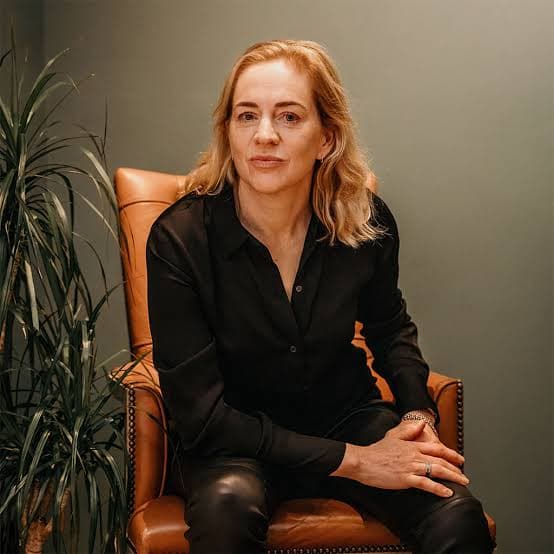
Erika Clegg is the founder and driving force behind Voice for Values, a consultancy that helps business owners and leaders define, articulate and embed the values, purpose and principles that shape their organisations. She is the author of Junk Values, which argues that most corporate values fail because they carry no substance - and sets out what genuinely nutritional values look like in practice.
Erika led a communications agency for many years before a management buy-out, which she credits entirely to the clarity of the organisation's stated values. She now works with individuals and leadership teams, speaks publicly on values-led leadership, and is currently developing new thinking on the role of principles in a narrative-driven age.
Full transcript231 lines
David VenturaI think in today's world, we live in a world that is full of storeys, the storeys in the media, whether that be on TV or on social media, Netflix, etc, And there's, of course, storeys in businesses as well. And we tell storeys to educate, to inspire, to engage, to entertain. And the trouble with storeys, of course, is that the narrative that's being told is often heavily influenced and of course, often biassed in one direction or the other. And we're seeing a world of extremes at the moment. And I can't help but wonder what that narrative does and what those narratives are capable of doing in business. Erica Clegg, you are back again. Thank you.
David VenturaI appreciate you coming back to join us on Rewarding relationships, because the last time we spoke, were talking about your book Junk Values and the importance of values in business and the importance of nutritional values in a world where most values are not doing the job that they've been asked and set to do. So that's got me into this world of narrative and the storeys that we tell and the importance of that. And of course, the biggest risk that if we're not telling the right storey, someone else will plug that gap. And I just wanted to open that frame and get us talking about the world of narrative today. So, Erika, thank you so much for coming back and welcome back to the show.
Erika CleggThank you for inviting me back. So, storeys.
David VenturaYes.
Erika CleggNow, here's the thing. So I spend a lot of time on trains, and one of the lovely things about going on a train is that it gives you time to really focus on a thing. And I've been writing something which started as an essay. I don't know what I would do with an essay, but it was just to get the thoughts out of my head.
David VenturaI love that, writing essays.
Erika CleggI know. Like, it's like being back at school. Yeah. And then I was like, this is turning into a thesis. And then before I know, it's turning into, I don't know, something else, a thing. It might even be another book, who knows? But what started this was the need for principles in a narrative driven age. And, you know, there's so much stuff to unpick in that. But I'd say we have to start with a question, because if you look at a storey, it's a bit like looking at the source of funding. If you are getting funding or if something with which you are engaging is funded, it's very sensible to find out where that funding comes from and maybe go a few steps back. Because often what looks like the source of the funding will being funded itself.
Erika CleggAnd funding is done for a reason. So people will fund things that further an objective that they have. And it might not be immediately obvious. It's exactly the same with storeys. So when you hear a storey, it is very sensible to find ways. And this is where we come back to principles. It is very sensible to find ways to unpick that storey. One of the things is, where does it come from? What do they want? And just as with. So let's say you read something in a newspaper, you could look, you know, you could click down to the bottom of the page and you could find out there where their head office is and who their chief executives. And you've got to go further back than that. So, again, back to funding. Where does the funding come from?
Erika CleggWhat are the objectives of the people who really are behind this newspaper? What are they trying to achieve? By what I am reading here, then I will decide what I take out of this storey. So I'm. I'm one of those people. I will get going. Back to newspapers. I would always read, you know, the Telegraph, the Times, the Guardian, because I wanted to be able to decide for myself where I felt the truth lay.
David VenturaYeah.
Erika CleggAnd so we're back to storeys again. And of course, the purpose of principles is what your principles do. And we, you know, we talked a lot last time about the fact that when you're clear about your principles, you articulated them, express them, and when you're facing a really tough decision, then you can literally read your principles and go, this one is going to help.
David VenturaAnd they can act as that guide. Exactly. The manual, if you like. Can I come back to principles in a minute? And because you said the word objectives there a few times, objective. And I think that's actually really important, because if you think about the storeys that we read, the storeys that we tell, the storeys that we absorb in every part of the. I'm going to call it the media world that we're in. Because whether it's actual media or not, like we're in the attention economy and everyone's trying to grab it, there is a purpose for telling the storey in the first place.
Erika CleggYeah.
David VenturaEven if that purpose, like, so the headline of a newspaper, its purpose is to get you to pick up that newspaper and consider buying it.
Erika CleggYeah, absolutely.
David VenturaThe storey that then follows is a version of said truth.
Erika CleggWe hope the truth, we won hopes the explanation.
David VenturaBut then you've also said, you know, you would read a Number of newspapers to get the real truth. There's a version of the truth underneath the headline, which is the way of telling that storey. And the purpose of that in media world might be just to keep reading that newspaper and buying more copies of it, but equally to be taught and to be educated and become aware of whatever that storey is.
Erika CleggYeah.
David VenturaIn the business world, the purpose of storeys is. Is, let's say to sell, and I use that word, you know, like, I suppose slightly reluctantly, because I don't necessarily mean just selling the product or service, like, I mean influencing the people that work there, the people that buy from you, the people that might fund you, the people that might invest in you, the next generation of employees of tomorrow. We are looking to influence and we like to think that the sort of final part of that sentence is influence with integrity. And not for all businesses. We know that influencing with integrity requires storeys. So the objective is influence. Right. In the large degree or like, what are the other objectives? I guess that's the question.
Erika CleggI mean, I. Again, I've been unpicking this. I mean, one thing on influencers, if I may, which is a bit of a side note, but just is a stat I love. So I've been. I've been at a big gathering recently and there was a lot of stuff about trust there, right. And the woman who's the chief exec of Ipsos Mori was sharing some absolutely fascinating data, one of which. And there was a lot about trust in politics. So there was this thing that politicians have for quite some time been sitting right at the bottom of the trusts scale. Now beneath them, influencers, 6%. It's the lowest trust score they've ever had. So that was fascinating.
David VenturaInteresting.
Erika CleggYeah, really interesting, but really high up. And actually, let's talk about this for a while and then we'll come back to storeys, chief executives and even higher up, co workers. And again, what I love to hear in these sessions was it was during COVID that chief executive actually were able to develop a much stronger relationship with their people because, you know, we all went into communication, gather people together, desperately try and create a sense of belonging mode. And so people who never saw their chief exec probably wouldn't recognise them, you know, apart from if they look on a poster who's, you know, their faces on, were seeing their chief executive quite regularly because they were having zoom meetings, team meetings, whatever, where the chief executive was speaking to them and they felt a sense of connection to them.
Erika CleggSo actually trust in chief executives, in companies, in co Workers in a world where. And again, this is what we spent a lot of time on last time, where obviously institutions, politicians, big business, the super wealthy, you know, media, all of these kind of things, trust is being lost. What's rather lovely. And Edelman has called it the year of insularity, which is not all a good thing, because there's a little bit of. I will surround myself by the people I'm comfortable with, which is not entirely good. But what is good about it is people are feeling safe with their families, their communities and the businesses in which they work or the organisations in which they work. So actually, you know, let's say this is for business owners. This conversation we're having now is for people who are working in business.
David VenturaYeah.
Erika CleggIt's a. It's an unparalleled opportunity. Opportunity to build on that trust, to work with that trust to. To. I don't want to say capitalise because it sounds cynical, but to build around it's belonging. And the point is, it's not. It's not something that's been created, it's an organic thing. It's something that's happened purely because of actually what was a really difficult set of circumstances that. A lot of different difficult sets of circumstances that suddenly we find, you know, particularly in the SME world, we find we have come out of it stronger as families, as communities, as organisations. And that's wonderful, actually.
David VenturaAnd it's. So there's some fundamental truths in there that I think we often forget, because they're so old, like they stand the test of time, like community, belonging.
Erika CleggYes.
David VenturaLike, if Maslow was here now, he'd be saying, see, I told you.
Erika CleggExactly. Because it's all right. And then. And so down to your. What is the purpose of the narrative now?
David VenturaYes.
Erika CleggIsn't everything. Selling isn't a relationship? Building a relationship with someone is. Requires a little selling on both people's part, if you want to put it that way. Or you can say it's about. What is it? Storeys. You know, from the very beginning of time. But back to the days before we farmed, back to the days where we lived in a subsistence life, where actually we had time. And in that time we sat round fires together and we talked. Storeys. Yeah, they are. They're a bonding thing. And that is why, you know, if you go back out to now. Just let me finish on this one. If you go back out to now, the political factions which have the most power to convince are the ones at the further edges, because they have got the most Powerful storeys, because storeys need a few things.
Erika CleggStoreys need an arc, so equilibrium, anti equilibrium. They need a villain, they need a hero. And it's much easier to have that sort of arc disruption and also that hero, villain narrative if you're sitting at polar opposites or something. It's very hard when you're all sitting pretty much comfortably in the middle, which most of our politicians have been since the mid-90s. So. So it is very old fashioned and.
David VenturaYeah, well, it's. It's old fashioned is one way of putting it, but I think it's in a good way, like it's found, I'd say, foundational.
Erika CleggYes.
David VenturaAnd so this is real. I had this image when you were talking about the bonding there and the telling storeys around a campfire. Right. So this kind of like, you know, community where we told storeys to each other. And of course, one of the things that draws us into a storey is the relatability.
Erika CleggYes.
David VenturaSo if we can see ourselves or hear ourselves in that storey. Yes. Then we're more likely to, to lean into it equally. If we hear a storey that we wanted to be part of, we're more likely to lean into it.
Erika CleggAll that elevates us in spite. I mean, right back to the UK for a split second. Although I know we're talking about business, but this is relevant and important. You know, for generations, the storey of Britain was based on a shared, widely understood, not deeply questioned narrative. And certainly when you and I were children, that narrative was very firmly in place. What has happened, some for good reasons, some unfortunately brought in by bad state actors, is that storey has been almost entirely blown up and what we are currently lacking is a connective storey to replace it. So I was talking to you just before we started about. The National Lottery has a predisposition amongst its players to something called win belief. And this.
Erika CleggThere's a guy I was seeing who's talking about it, who works with National Lottery, and he's saying, what Britain needs is win belief. And I would say, you know, you stitch that back down because I, I was always looking at these conversations through an SME thing. It's like, how can SME support this? But Also how can SMEs be supported by this and SMEs that have win belief? Not talk about naive optimism. I'm talking about just get all the stuff in the right place, you know, get the strategy right, get the tools in place, systems, processes, all of that. You've got to have when belief, if you don't have win belief, you ain't going nowhere. And that's what good storeys do, is they can create that sort of bonded sense of win belief.
David VenturaYeah. And so what is winning? Winning could be good people doing good things for good results.
Erika CleggDoesn't have to be, though, does it?
David VenturaGreat people. Great people doing great things for great results.
Erika CleggYeah.
David VenturaSo, yeah, that win belief and belief systems. And that's the other thing that I think interests me when we talk about storeys that can be relatable, that we relate to, because we tend to be, you know, we tend to gravitate towards people or things that share beliefs and principles and therefore those beliefs that we.
Erika CleggShouldn't, of course, should we? Well, so it's good to challenge ourselves.
David VenturaYeah, good to challenge ourselves. And yet we love a tribe, don't we?
Erika CleggYeah, we do. And that's fine. And that is belonging. So I was being slightly playful there, but, you know, it is important that the tribe does not become so tribal that we can't see beyond it, because then that's very.
David VenturaYeah, we don't want it limited, excluded. Yeah, yeah. So, yeah, you're absolutely right. The idea of a belief system that is limiting would be something that we shouldn't just stand for and accept. We should challenge.
Erika CleggSo can we riff on beliefs for a tick? Because obviously values, beliefs, principles. I mean, last time I'm sure I said that when I'm working with people, individuals about what their principles are, the starting place is always going to be, oh, well, my values are so and so. And they'll say stuff like hard work, whatever. And then, of course, the question that immediately has to come from that is, that's interesting, where does that come from? And I use hard work as a specific example because that's just the one which always reveals itself beautifully quickly. Because they'll go, oh, well, my dad used to. And you're like, that's not a value, that's a belief. And beliefs are great, but beliefs can be very limiting.
Erika CleggSo what you need to be able to do is you need to be able to dip below those or further down into actually. What decisions do you mean? What decisions do you need to make to really capitalise on the beliefs that work for you and to minimise the negative impact of beliefs that limit you? Then, funnily enough, it's almost like when we talk about organisational beliefs or, you know, even personal beliefs. So I have a belief that I state, which is that everything good should flourish. That's not one of my values. It's just something that, to me is so fundamentally that just makes such sense and, you know, it's negative, is the fact that things which are not good should not flourish. So you have to be able to chop out the stuff that isn't good in order to support the good.
Erika CleggSo that belief is something that my values help me to deliver. So, you know, as always, there are words which don't help. The semantics of this are actually. Can be quite unhelpful.
David VenturaWell, I, like, I love the. And I. So I would definitely advocate this idea of challenging the beliefs that you might have. So, you know, we talked before about the, you know, the common belief in business that people buy from people. And of course, sometimes that is true and equally, sometimes that sentence isn't long enough and there's loads more to unpack there.
Erika CleggAnd I'm particularly now.
David VenturaRight, and if we just hold it as a single sentence that doesn't capture everything, then it becomes a limiting belief in the sense that we don't have behaviour that follows. I do also completely agree that the idea of beliefs and principles sit separately, although aligned with the values and of course act as your sort of playbook, your guide to make sure that you are on track. But there are far more beliefs and principles that sit beneath the surface of all of that. How do we know what our beliefs are? You just said a couple that are very much yours and you know them and you probably say them regularly and therefore reinforce them.
Erika CleggSo these are the guiding beliefs, not the limiting ones. Yeah, it's. It's interesting. Oh, goodness. I mean, because I'm so completely fascinated by it and I'm so compelled by it and I know the difference it makes and I know that now. Today is the fourth anniversary of us MBO in our business. Three of its senior leadership team that was able to come about because we had absolute clarity about our organisational values, our organisational purpose, and everyone grew exponentially quickly in the light of that awareness, to the point where, you know, three people became absolutely ready to take it over.
David VenturaYeah.
Erika CleggSo, you know, I've seen that in my, you know, blood, sweat and tears. I've been there, I've done that. I've seen it work in countless other organisations as well. But to come back to your question of how we know things are our belief, you've got to try it. You've got to sort of say this feels vaguely right, you know, like anything, like any new regimen, like exercise.
David VenturaYeah.
Erika CleggTry things that I want to get fitter Great. What's going to work for you? Might be yoga, might be dancing, might be football, might be running, might be mountain climbing. It's going to be. You've got to give them all a bit of a try. You'll know the ones that don't work for you.
David VenturaAnd so. And that describes wonderfully the idea of self belief and reinforcing self belief. What was it the Romans used to say? Give me the boy at seven and I'll show you the man?
Erika CleggYeah, yeah.
David VenturaAnd the reason that they said that is because that, again, statistics and psychology and can, you know, convince me otherwise. I don't know what the actual stats are, but they'll say that 70% of a human's beliefs are formed by the time they reach seven years old.
Erika CleggYeah.
David VenturaAnd if that's the case, so the question of how do we know what it is that we believe? Not how do we double down on self belief? How do we know what it is we believe? Yeah. And you've just said you are intensely curious, you're fascinated by it and in being fascinated about it, you will articulate it, you'll talk about it and therefore others will hear what you believe as you say those things out loud.
Erika CleggBut the fundamental thing here is so you can go through life with a very clear set of beliefs if you do not challenge whether they're beneficial to you.
David VenturaRight.
Erika CleggSome of those beliefs will hold you back. I am very aware of beliefs that I held dear and still, to a degree, honour, but which really helped me back. Super helped me back. And that doesn't allow you to support the people around you. That doesn't allow you to do your civic duty, that doesn't allow you to do your job as a. As a, you know, as an employer or as a member of a team or, you know, what, member of a community, member of a family. So it's really helpful more than anything else, I would say, if we talk about the personal stuff, is to question. It's very easy. You don't have to. It's not hard. You have to go, where does that come from? And the root of where that, you know, we're back to storeys, aren't we? We've had to funding.
Erika CleggWhere does it come from? Was that a good thing? Because actually, often beliefs, say one of my beliefs that I had, which I've managed to move on from, was based one of my parents who had a very clear stated value and never lived by it. What does that tell a child? And at the time, you don't Know, because you're not going, well, that's interesting. They're saying something, they're doing something else that's really screw me up. You just experience it and it's only as an adult that you look back at and you go, oh, look at those steps I took. I. Look at those choices I made, look at those decisions, and I now recognise that's related to the impact of that thing that happened. And by the way, it can lead to the good.
Erika CleggIt doesn't all have to be sort of, you know, a child called it, you know, even good things sometimes. See, let's say we're given loads of gifts. I was never showered with gifts as a child, but I imagine if you are showered with gifts as a child, the fact that as an adult, it's not so easy must be horrifying. It hasn't been helpful. So it's. The first step is always to go, where does that come from? And why. Why? Yeah.
David VenturaAnd being intensely curious at all times.
Erika CleggYes, definitely.
David VenturaI. There are some curious beliefs that I hear all the time and that others will see, of course, even in their businesses that, you know, and we could. They could each explore why do they hold that belief? Where did it come from? Who started it?
Erika CleggYeah.
David VenturaAnd it will have been in a storey or a statement, perhaps from family growing up, things like it being rude to talk about money.
Erika CleggYes. Isn't that interesting?
David VenturaThat's really fascinating, isn't it? So the belief that it's rude to talk about money. Fast forward into a world where you're a business owner and you've got salespeople who need to talk about the price and all of that, and that's going to fundamentally limit them in the way that they go about talking about something that they've been told is rude.
Erika CleggYes.
David VenturaThen there's another one of. So hard work. Right. So hard work is. Is. Is, you know, a principle of value, a belief that you will live by. If you do good things, you. You put the effort in, you'll get good rewards. And, and there could be an assumption. And because of storeys that are told, if you recruit the right people and you pay them a good wage, they will work hard for you.
Erika CleggThey will slog like pit ponies. Right. Yeah.
David VenturaAnd yet how many business leaders across the land right now are frustrated that they're good people who they have recruited because they were great and they're paying them a good, great wage, often more than maybe the rest of the market is paying, are not slogging their guts out yeah. And working really hard for them because the storeys elsewhere in the business aren't strong enough.
Erika CleggNo, that's. That's a really. That's a really interesting point. And I think, you know, the hard work one, going back to that is really interesting because, of course, ultimately it's better to achieve your objectives in the sort of, you know, by the quickest route possible. So hard work, normally, if I'm. If I'm with someone who goes, hard work is one of my values, we generally manage to get them somewhere else fairly quickly. But some people, including my own husband, will go, no, I judge myself on how hard I work. And that is the thing, it's not the outcome. I mean, he's very. You know, he achieves wonderful things, but nonetheless, what he's really holding himself to account against is actually really how hard he works. So amongst my personal values, there are two which help me to sort of navigate that.
Erika CleggAnd that's what we need to do with values. So the two that help me navigate is, one is make the effort. To make the effort. Says, work hard, you know, wrap things up with a bow. Make the effort.
David VenturaYeah.
Erika CleggPut the hours in slog. You know, you know me, you know, I do 100%.
David VenturaBut the other one is I see the selfies every day from another train station.
Erika CleggIt's a lot of hard work. Take all those selfies on train stations.
David VenturaI mean, some might think you are just a train spotter.
Erika CleggI live on a train station. I know, it's great. The stats on train station selfies are ridiculous. Anyway. The other one, the one that counterbalances that and helps me to manage it well, is know what matters, because ultimately you do what you need to do to achieve what you need to achieve. There's no point doing extra. That isn't going to make any better impact. If it's going to make better impact, you should definitely do the extra. But know what matters. So the benefit of corporate values. I will always, when I'm working with organisations, we will always wrap it up in a narrative. When I'm working with individuals, we will always wrap it up in a narrative. I also come up with a little title.
Erika CleggSo a guy I worked with recently, we called him the human pebble, because he does, you know, he keeps himself to himself, but wherever you drop him, there are massive ripples. There was another one who had this sort of balance of the impact he made on society and his intense, raging personal ambition, and it was that sort of balance. So it's really good to sort of build those narratives around. But it is absolutely in support of principles that help you to achieve what you need to achieve and not just swoosh in the direction of the most convincing current narrative.
David VenturaAnd it's keeping you on track rather than being dragged off and in different directions. And those different directions can be really appealing. And that's part of the channel. Oh, right, yeah.
Erika CleggAll the fun stuff.
David VenturaExactly. And I'm an epic squirrel. You know this. If something is exciting and shiny, you're.
Erika CleggGonna have a go. You're gonna go have a look at it.
David VenturaI. I want to come back to something that you said a moment ago. Your four year anniversary today of when you.
Erika CleggYes.
David VenturaWhen we emba the MBO journey.
Erika CleggRight, yeah.
David VenturaAnd that's really curious because you talked about that was only possible because you'd built an organisation that had so much clarity that its senior leaders grew within it to the point that they became the successors. Naturally.
Erika CleggYes.
David VenturaAnd have taken it on to do great things because of where it was and because of the journey that it can continue on. And that clarity mattered. I know you well and I imagine the storeys you told on that journey that inspired those people to be the great successes that they've become were. Were great. Like, were incredible. So storytelling is a talent, is a gift, and it's not necessarily a finessed gift in everyone. The thing I always find fascinating is in any business, the leaders need to be great storytellers for clarity, for inspiration, for guiding through empowering through influencing. Come back to that word again. What if they're not? Like. Because it's true that if we're not leading our business, there isn't a business that doesn't have a leader. It's just that the leader isn't the top of the. Yeah.
David VenturaLike it's someone else will lead in.
Erika CleggThe absence of you. It's interesting, isn't it? Again, sort of another one which obviously, because of the world I work in, the subject of leadership values, leadership principles, leadership personality types come up a lot. And I will always come down to the fact it's better to be yourself. So as a leader and as an organisation, you know, if you're not Apple or Google or Amazon or whoever else you think you want to be, Patagonia, then you're not. You're you.
David VenturaYeah.
Erika CleggSo the very best. And you know, if you are not as a leader, I don't know who's the most charismatic, inspiring leader you can think of.
David VenturaNo, that's. That's too difficult.
Erika CleggOkay, fine.
David VenturaRight. It's charismatic and inspiring leader of all time. Of all time.
Erika CleggYeah. Go for it.
David VenturaSo this is. I go into contra mode here.
Erika CleggAlexander the Great.
David VenturaCome on.
Erika CleggIf you're not Alexander the Great, okay,.
David VenturaThen he called himself the Great, by the way. Or did someone else say he was the Great?
Erika CleggI struggle not a historian. I don't know. I don't know.
David VenturaSquirrel.
Erika CleggYes, Squirrel.
David VenturaRight.
Erika CleggIf that's not what you're like, and you know, if your leadership personality is not that, you are, you know, really good at stating the vision, really concerned about equality, really concerned about global impact. If that's not you, don't pretend.
David VenturaRight?
Erika CleggDon't pretend. Because do you know what? Some quiet leaders are really good. Some quiet leaders are trusted, respected. And maybe they won't be out there, you know, booming away. Maybe people will come to them, but maybe people gravitate to them because sometimes that's still small voice of calm in the middle of things dependent upon the organisation is.
David VenturaI wonder how many of those quieter leaders have storytellers on their top team.
Erika CleggWell, and I think you would need that. I think you would need. And actually partially, if you cannot speak for yourself in that respect, then probably people need to explain.
David VenturaYes.
Erika CleggThat you're a quiet leader and that is your leadership. I think it. I think it would be harder. I have to say, I do think it would be harder. I mean, there is no doubt at all that there are certain personality types, there are certain values that people hold that make them more box ready for the leadership role. Yeah, I would say.
David VenturaAnd, and so skill set is skill set, competency is competencies. All those things can be trained. Some of those things are much more natural to others.
Erika CleggYeah. It's just easier.
David VenturaYeah, yeah. I'm a big believer in filling your blind spots with the team and not necessarily, you know, slogging away to try and upskill something that's just never going to be your forte.
Erika CleggNo, exactly.
David VenturaAnd so, you know, beliefs, principles, they're there. If they're articulated, they're much stronger and much more powerful because we can then challenge the ones that don't work.
Erika CleggYeah.
David VenturaValues are slightly easier to anchor into once you've done the work. Right.
Erika CleggWell, that's why you do it.
David VenturaExactly.
Erika CleggYou know, because again, a common sort of pushback that I'll encounter is people going, oh, no, we don't. We don't need to look into our values because intuitively we just sense them. And you go, that. Do you know how hard that makes life?
David VenturaYeah.
Erika CleggYou know, express them. Because then Everyone else knows what's expected of them as well. And also, when you are in the really difficult situation that we will have talked about before, where suddenly, you know, you're rabbit in headlights, fight, flight, freeze. I can't remember what my gut instinct is telling me in that moment because it's frozen.
David VenturaYeah.
Erika CleggI need the words. Give me the words.
David VenturaExpressing them. And that's part of the storytelling. Like an expressing. Expressing them repeatedly. You know, those people that work in digital marketing would talk about SEO and the keywords that you need in the storeys that they are.
Erika CleggKeywords. So much for. This is like. Keywords. Yeah.
David VenturaSo these have to be keywords in the storeys that you tell.
Erika CleggYes.
David VenturaRight. And principles need to be there and understood and beliefs have to be articulated.
Erika CleggAnd challenged where possible because then everyone understands them. Because actually, you know. Let's go back to the leader as narrator. Narrator.
David VenturaYeah.
Erika CleggYeah. Storyteller. The leader is storyteller.
David VenturaYeah.
Erika CleggLet's say, for the sake of argument, that a good leader is probably also a good storyteller. It's just much easier that way.
David VenturaI'm an idealist, so I just think. Make that statement. Put it in the job description.
Erika CleggExactly. I would say in my role at the business that I owned before, I was doing this storytelling to team storytelling to clients, storytelling with clients. I mean, we're a comms agency, so a lot of it was storytelling.
David VenturaYeah.
Erika CleggStorytelling within our community. Because were based in a very counterintuitive place and I. And were partially there so we could contribute to the community, but also because were there, we should contribute to the community. And a lot of that was about storytelling in terms of the opportunities in this place, what. What it's like to belong in this place, where this place is going. Why. Why other people would like to be here.
David VenturaOh, can I?
Erika CleggYeah.
David VenturaDing, ding, ding. Where. Where it's going.
Erika CleggYeah.
David VenturaWhere it's going is the destination.
Erika CleggYes.
David VenturaAnd you're not there till you're there and you might never get there. And even when you get there, the destination might be very different to what you thought it was going to be.
Erika CleggThat's vision.
David VenturaRight. We live and we experience in the now, not then. Yes. Right.
Erika CleggThat's why you need purpose as well as vision.
David VenturaRight.
Erika CleggSo. So when I. When I frame. So back to my. The core model, at the very heart of everything I do is this thing called activity. Thank you. As you know, you've done your homework. Well done.
David VenturaDing, ding.
Erika CleggYeah. Active ethos is predicated on the fact that when we talk about values, they should be stretch values. Because stretch. Stretch values help you make decisions that will help you be your best. That's kind of useful, you know, in a, let's say, corporate environment, it's good to have people who are being their best. It's good to have a company that is being its best. But then equally they'd be like, yeah, why? So what I'm turning up. Can I just get on with my job? Not another management initiative. I wholeheartedly get that. So you need to give people a reason to care. You need to give them motivation. Then you have vision. That is the destination, the moonshot, the I'm putting a man on the moon thing. You know, the storytelling, the really exciting. The really. Can we. Can we.
Erika CleggBit scary, bit of a bhag. But again, that's like. That's a bit of so what, to be absolutely honest, because it could just be a very convincing but ultimately naive storey.
David VenturaYeah, yeah.
Erika CleggYou know, it doesn't take long before people are going to start veering away from that. So this is why purpose is so important, which is okay. At the very heart. Heart of it. Why are we here? What are we here to do? And I don't want to see three long paragraphs of words like integrity and, you know, all of this stuff. I want to see something very specific articulated in as few words as possible that still strikes a chord and makes sense.
David VenturaYeah. And all articulated in as few words as possible.
Erika CleggBut the. But makes sense because just saying integrity, you know, going back to the values, words. That doesn't make sense.
David VenturaNo.
Erika CleggSo you need to express, you know, people speak in sentences and phrases. People don't speak in single words. So that's how it needs to be.
David VenturaYou should meet some of the kids that go to the local school. I think they only have single words and some of those aren't in words, they're just sounds.
Erika CleggYeah, no, I know. Well, yeah. But forgetting them, so.
David VenturaSo alienating our Gen Z and Gen Alpha audience.
Erika CleggI know, because it's a huge audience we have. So again, at this thing I was at last week, the guy who has the. The dubious pleasure of being the Chief Executive of the Post Office.
David VenturaYeah.
Erika CleggWas there in a session that was about rebuilding trust and he was saying, I know, Big ask, big ask, but they can do it. And I know how they can do it. And he said there are three aspects to trust. And one of them is. I can't remember exactly the words he used, but one of them is basically Having a plan, the other one, you know, having a place that you're taking it to, having a clear plan to get there. And the other one is track record. And he said, we've got no track record because the longest. The longest any member of the senior leadership team has been in the role is 14 months. Everybody is new. Senior leadership team is new, board is new. Everybody at that kind of real senior leadership level, who's in charge of this rebuild is completely new.
Erika CleggSo they have no track record. So he said, the only choice we have is to express where we're going, express how we're going to get there and then to just get on with it.
David VenturaYeah. And it's getting on with it. That's the now experience. You know, if only they can see what's on the horizon to say for the raw mail. Maybe not.
Erika CleggWell, no, Post office is different. But you know what's really interesting about them and Post Office. Yeah, yeah. So what's really interesting about them is, of course. So I don't know about you, but where we live, we don't have banks anymore because Lloyd's. This is one of my common gripes. Lloyd's has this whole ad about being by our side, but they left our town. They've left a lot of towns. They're not. They're not by my side, even if they are in the pocket. Lloyd's left, Barclays left, you know, whatever all these things are leaving. There at the centre it all is the post office with, you know, three or four ladies who work in there who goes, oh, how's your daughter? And, oh, how are you? And I'll use that parcel you sent off last week. They know everybody but you.
Erika CleggPeople go into the Post Office just to see someone. You have people who are lonely, who live on their own and they're going into the Post Office so that they have a conversation that day, actually. Isn't that awful? But thank goodness the post office is there.
David VenturaYeah.
Erika CleggSo what these people have absolutely rightly identified is nobody's argument was ever with their post office. No, it was with the Post Office.
David VenturaRight.
Erika CleggSo they have this amazing thing. I hope they don't cheapen it. It's very easy to cheapen. You know, your post office is very easy to do that cheaply. I hope they do it well. They're absolutely right because my relationship and I would fight tooth and nail to keep that place open. So they're very lucky that they have that amazing emotional asset.
David VenturaYeah, I like that.
Erika CleggYeah.
David VenturaSo there's so much. So much More we could unpack in this always this world of telling storeys, because it is. Episode one was all about values and the importance of that and why they need to be nutritional and not junk and.
Erika CleggYeah.
David VenturaWhy often they just don't work because they are just these words on a wall, keywords that have no substance. Now we're talking about narrative and the importance of narrative.
Erika CleggYou can't build any of this up without the narrative.
David VenturaYeah. And storytelling as a skill set.
Erika CleggYes.
David VenturaAt leadership level.
Erika CleggYes.
David VenturaAnd a skill set that if we don't have it.
Erika CleggYeah.
David VenturaWe need to find it and find it quick because those storeys have to be told.
Erika CleggCan I tell you a storey?
David VenturaYes.
Erika CleggRight. I used to. And this will surprise you, I used to be petrified of what is called public speaking.
David VenturaRight. I mean, literally, you're in the top ever many percent. It's like the number one, Right.
Erika CleggClaustrophobia, this disco legs, like, just terrified of it. I wouldn't do it. I would never do it. And I thought, this is ridiculous. I'm running a company, I should be able to stand up. I would do round tables, I would do all sorts of things, platforms, whatever. I just wouldn't do the speech. And now, of course, a lot of how I make a living is by doing that. And it came about because I was asked to represent business for young people in our region. So I'm in the east of England who had just come out of school and were just going to be moving into the workforce. And this was about galvanising business to open their doors to young people, to say, give them a chance, give them work experience, get to know the schools. Business is contingent on you to make the effort.
Erika CleggYou have to be going out to the schools and offering this stuff. And I was like, well, I have to do it because it's not for me now. This is for the young people. It's for the young people. So I have to do it. And the thing that got me through it was storytelling, because at that point, my young person, who is now 16, was a baby, he was 2, and we used to read about four storeys together every night. And I loved it and he enjoyed it. And there is a comfort and there is a rhythm and there is an informality and closeness in telling a storey. So the way I got myself up on that stage was I went up and I told a storey and it was brilliant.
Erika CleggAnd literally, it was one of those things where people stood up and cheered it and I was like, oh, should have done this years ago. But the only Thing that could move me forward. So if you are someone who is, as you say, like everyone is scared of public speaking, if you are someone who, in your role, needs to do it, telling a storey will get you through it, I guarantee. It is a humdinger of a storey,.
David VenturaAnd maybe that's the challenge. So for listeners and viewers of this.
Erika CleggPodcast, such a challenge.
David VenturaWhy don't we each go away and write the storey and then share it? That if we told it to our people, our team, our business, and even assume at times that the customers in the room too, and they're listening. Right.
Erika CleggCustomers care. Sorry, this is brand. Sorry, just very quickly, before you finish. So you say people buy from people, but obviously a lot of the time people are not in front of people to buy from. So somehow what brands have to do is they have to create that relationship, that trust, that loyalty, that sense of belonging that you would normally have got with Fred down at the Post Office. Brands do it brilliantly. They do by telling storeys.
David VenturaAnd they tell those storeys in such a way that others retell them.
Erika CleggYes, exactly.
David VenturaSo the storeys matter. The challenge to our listeners and viewers is to. Is to write the storey. It doesn't have to be a long storey, but should be short. Yeah, a short storey.
Erika CleggBeginning, middle, end, hero, villain.
David VenturaNice.
Erika CleggYeah, nice.
David VenturaAnd maybe it's a storey that's got a cliffhanger, like what's coming next. Maybe it's a storey that has a happy ending. Maybe it's a storey that makes you feel like you've got to get up and do something.
Erika CleggI think we need to do competition.
David VenturaShall we?
Erika CleggLet's do a competition.
David VenturaAll right, let's do it.
Erika CleggStoreys are made to be shared, so storeys are powerful.
David VenturaStoreys matter. The narrative is so important. It's integral when it comes to values. It's part of the values mindset. It's part of the win. Belief.
Erika CleggWhen belief.
David VenturaRight. And everything that we've talked about today is just rooted in making people much more visible and heard within your brands and within your organisation and internally, actually,.
Erika CleggBecause you will, as people and as an organisation, if you get your storey clear, you actually understand yourself a lot better.
David VenturaI'm intensely curious at what the next chapter of this series of books is going to be in our conversation for now. That's a wonderful way to close off this episode and say, Erika, thank you so much again for joining us. The end.
Erika CleggThe end.
Transcribed by https://fireflies.ai/